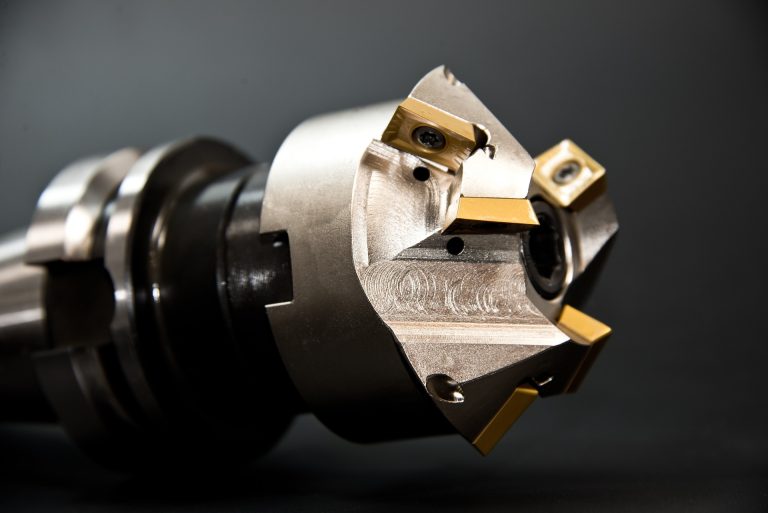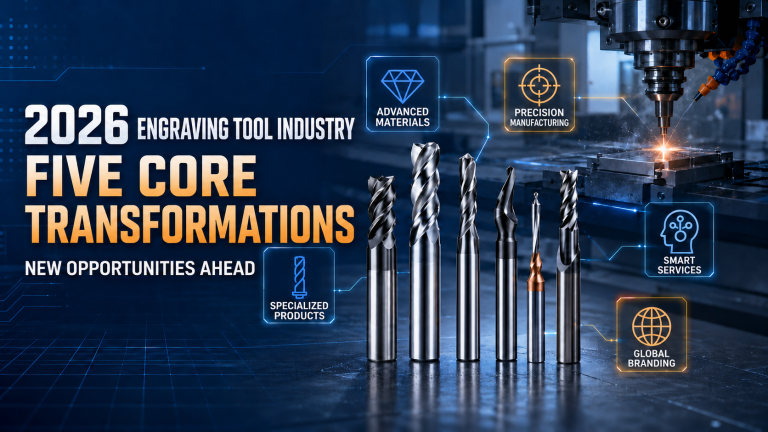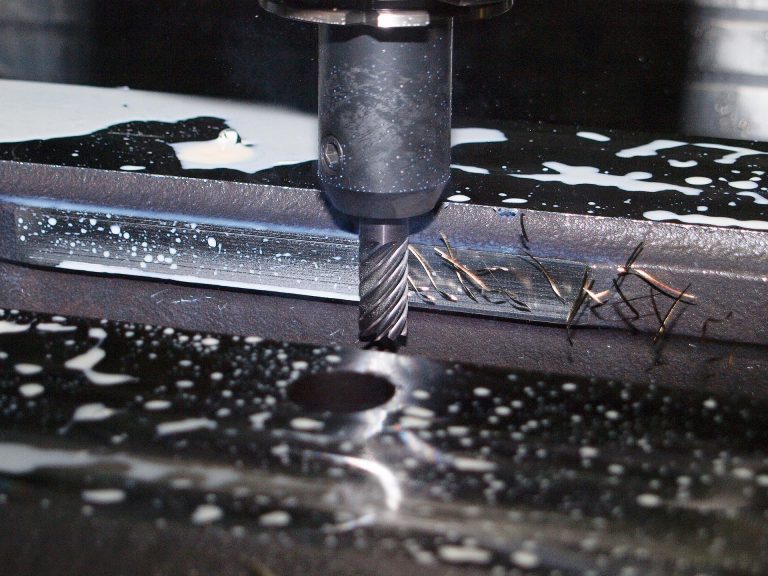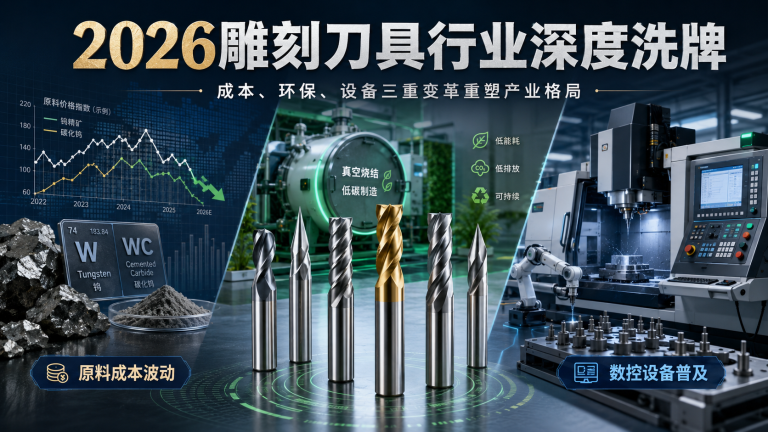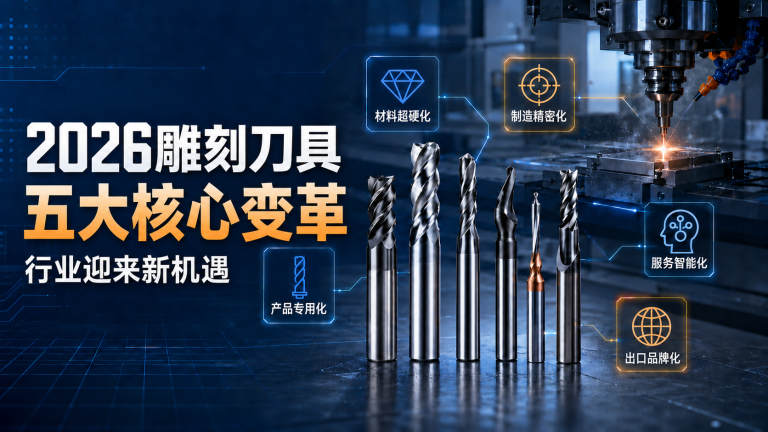
Carbide CNC engraving bits provide the hardness, wear resistance, and cutting-edge stability needed for detailed machining at modern router spindle speeds. Compared with many high-speed steel tools, solid carbide cutters can hold a sharp profile longer when geometry and cutting parameters are correctly matched to the material.
Advantages of Carbide CNC Engraving Bits
The main advantage is predictable cutting performance. A rigid carbide body resists deflection, while precision-ground edges reproduce fine lettering, logos, grooves, and three-dimensional details. This combination supports clean surfaces, accurate dimensions, and longer intervals between tool changes in sign making, woodworking, plastics processing, and craft production.
- High hardness: maintains the cutting edge during repeated engraving operations.
- Wear resistance: supports longer service life in abrasive wood, MDF, plastics, and composites.
- Dimensional stability: reduces deflection during fine lettering and detailed patterns.
- Clean cutting: sharp, polished edges help reduce burrs and post-processing.
- High-speed capability: suitable for productive CNC router operation within recommended limits.
Hardness and Edge Retention
Carbide retains useful hardness at cutting temperatures that may soften other tool materials. That does not make it indestructible: carbide is comparatively brittle and requires low runout, rigid workholding, and controlled feed. When the setup is stable, the edge can remain accurate through longer production runs and maintain consistent engraving depth.
Surface Finish and Chip Control
Flute geometry determines how chips leave the cutting zone. Single-flute designs often provide generous chip space for acrylic and plastics, while two-flute and specialized engraving geometries serve other materials and finish requirements. Polished flutes can reduce chip adhesion, and suitable coatings may help control friction or resin buildup in selected applications.
Materials and CNC Engraving Applications
Carbide CNC engraving bits are used for wood, plywood, MDF, acrylic, PVC, engineering plastics, laminates, and selected non-ferrous materials when the tool is designed for the job. Typical work includes signs, nameplates, logos, furniture decoration, relief carving, model making, jewelry patterns, craft components, and precision grooves.
Material behavior matters. Wood grain can tear, MDF is abrasive, acrylic can melt, and brittle plastics can chip. Choose the cutting diameter, point angle, flute shape, coating, and edge polish for the workpiece rather than expecting one cutter to perform equally well everywhere.
How to Select the Correct Engraving Bit
Start with the smallest feature in the design and the required engraving depth. A narrow tip can produce fine details but has less strength, while a larger diameter is more rigid and can remove material faster. Confirm the shank diameter fits the collet and keep tool projection as short as practical to reduce vibration.
- Match the cutter material and geometry to the workpiece.
- Confirm tip diameter, cutting angle, flute length, shank, and overall length.
- Use a clean collet and check spindle runout before fine engraving.
- Begin with conservative speed, feed, and depth-of-cut settings.
- Inspect chips and surface quality, then adjust one parameter at a time.
Operating and Maintenance Tips
Secure the workpiece, verify the tool path, and confirm adequate clearance before starting. Chip load must be high enough for efficient cutting but not so aggressive that the small engraving edge deflects or breaks. Effective dust collection or air flow helps prevent chips from being recut and reduces heat around the tool.
After use, remove resin and debris without striking the edge. Store each bit separately in a dry holder. Replace or professionally sharpen a worn cutter when engraving width increases, fine corners become rounded, burrs appear, or cutting noise changes. Continuing with a dull tool can overheat the workpiece and strain the spindle.
Carbide Engraving Bit Supplier in Guangzhou, Guangdong
JEEFOO supplies carbide CNC engraving bits from Guangzhou, Guangdong, China for distributors, sign makers, woodworking factories, CNC workshops, and international buyers. Customers can confirm material, machine, dimensions, and finish requirements before ordering. Explore the JEEFOO CNC cutting tool range for engraving, routing, and milling solutions.
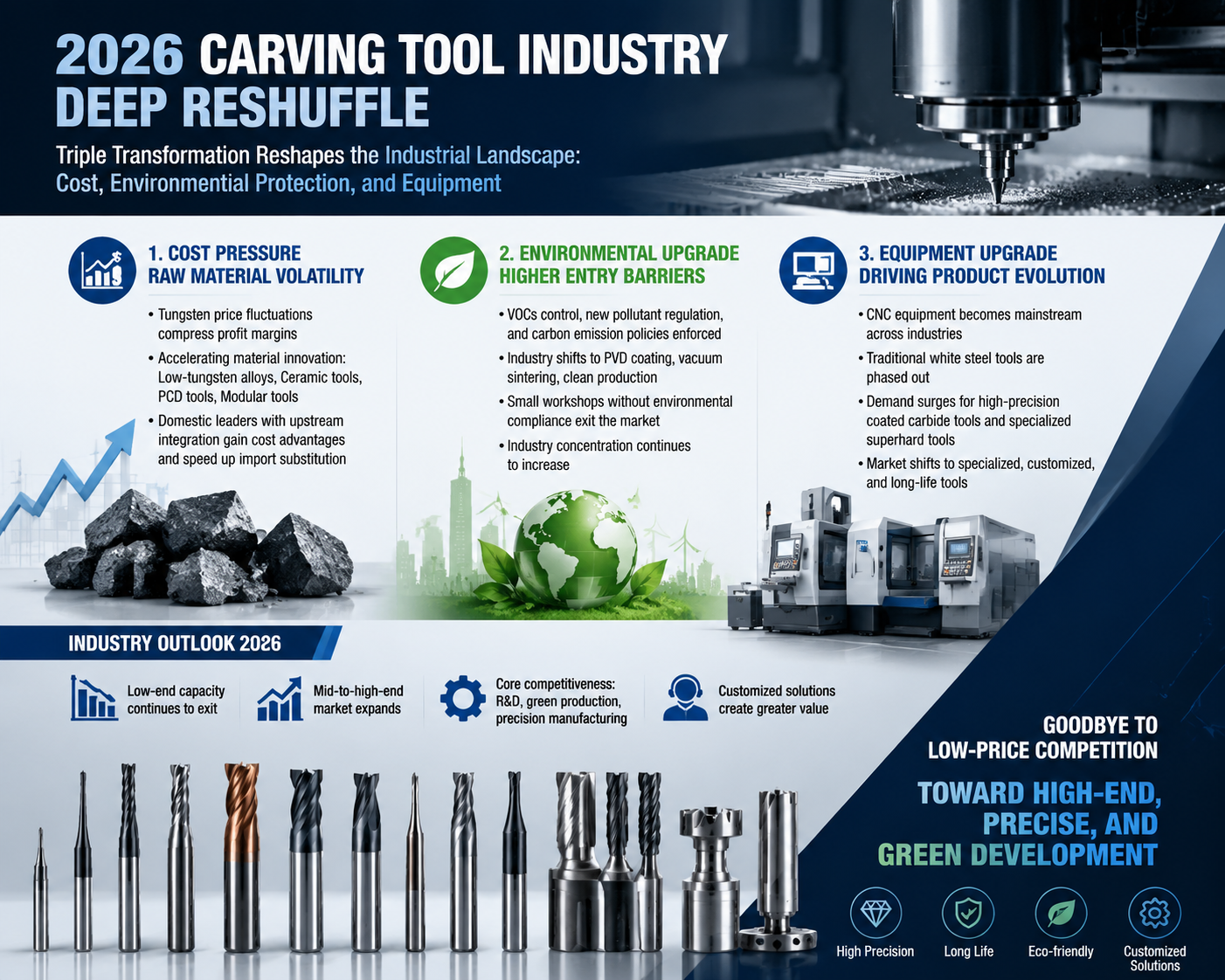
Frequently Asked Questions
Why does carbide last longer than high-speed steel?
Carbide offers higher hardness and wear resistance. Service life still depends on material, geometry, runout, chip load, cooling, and machine stability.
Which bit is best for acrylic engraving?
A sharp cutter with polished edges and sufficient flute space is commonly preferred because it evacuates chips and limits heat. Select geometry according to the acrylic grade, thickness, and required detail.
How can tool breakage be reduced?
Minimize runout, use rigid workholding, shorten tool projection, avoid excessive depth, and maintain a suitable chip load. General process background is available in this engraving overview.