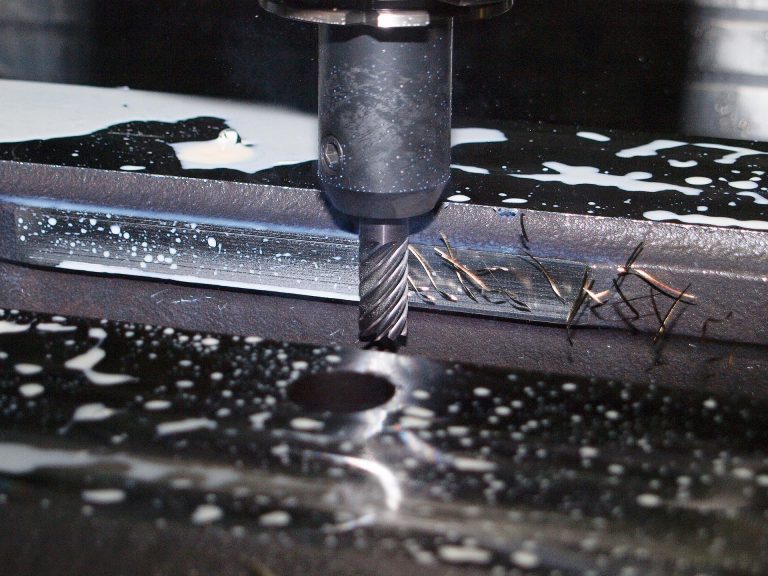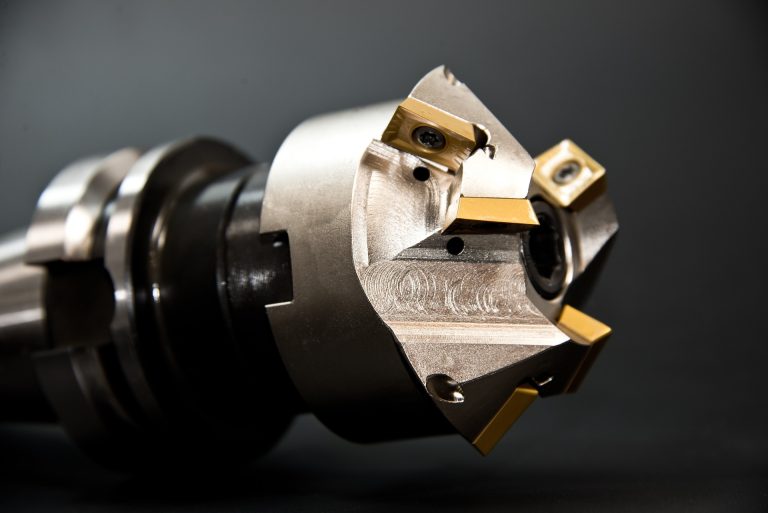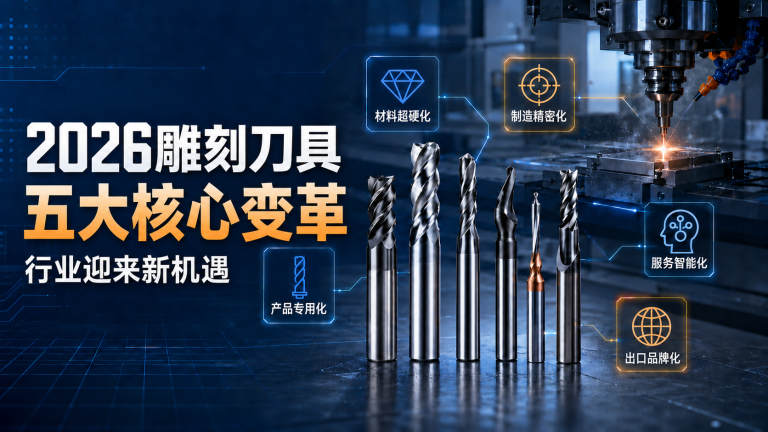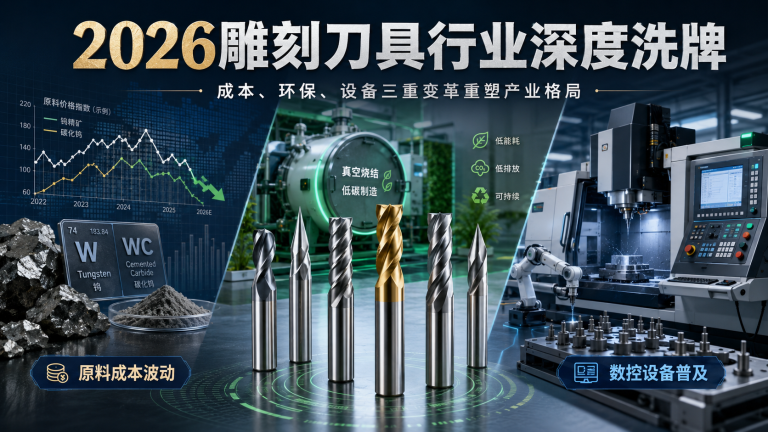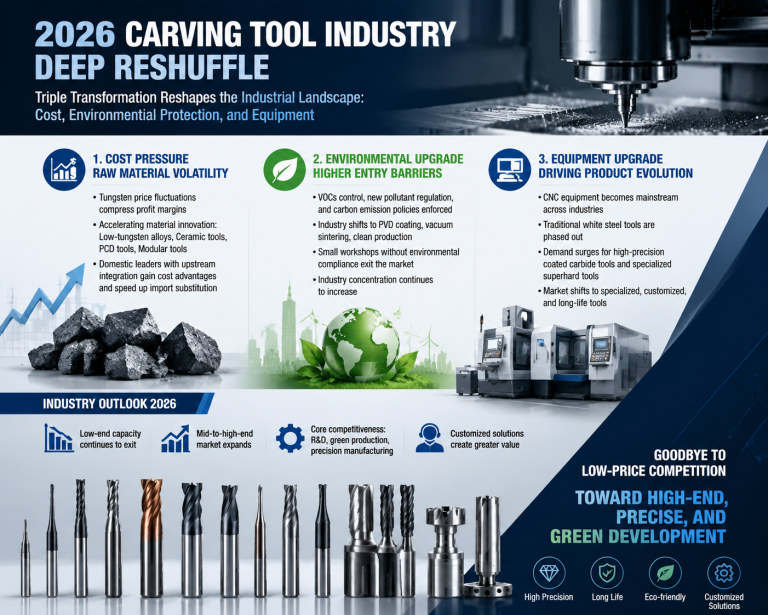
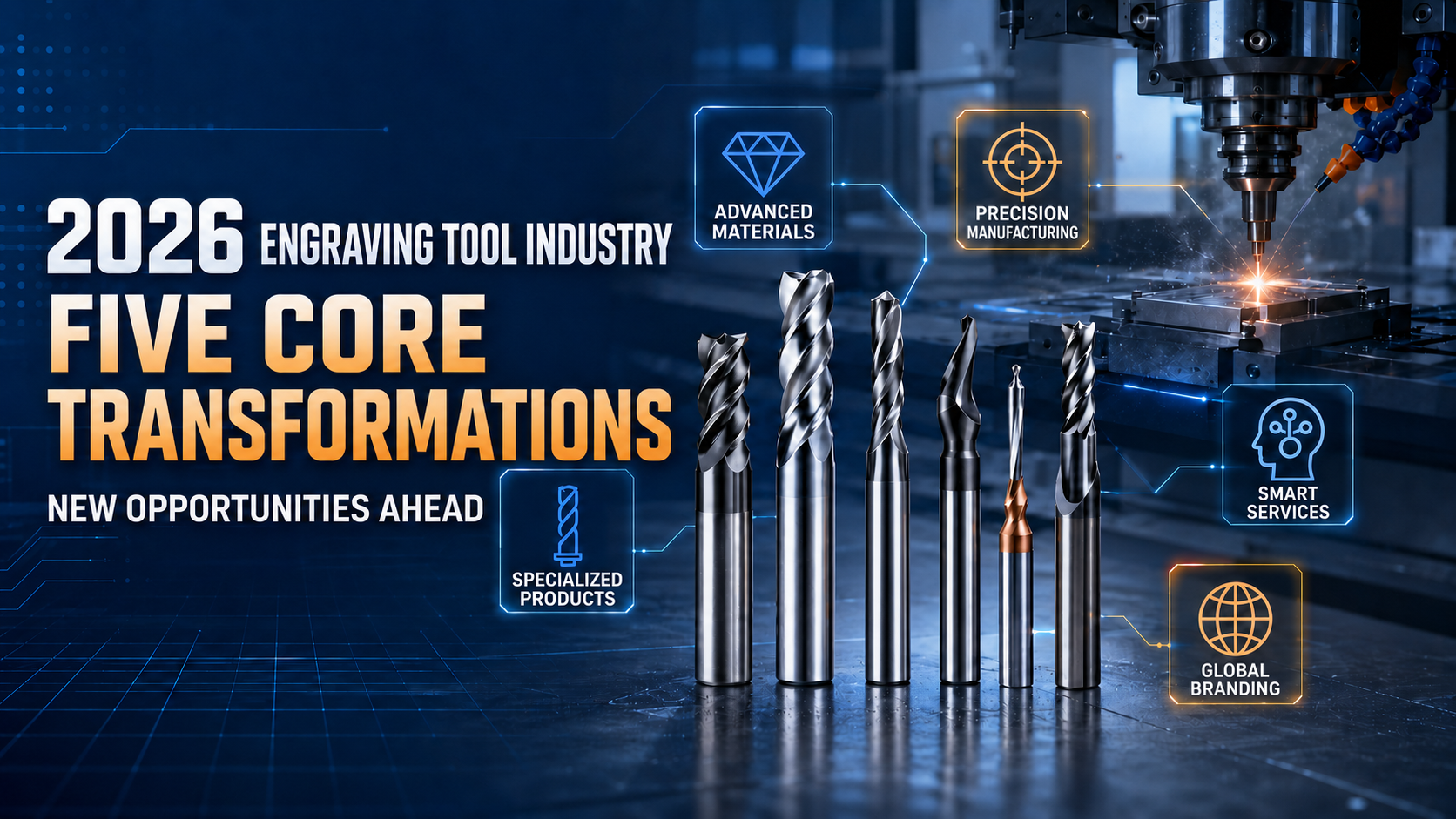
CNC engraving bits are precision rotary cutting tools used for lettering, signs, reliefs, grooves, profiles, and detailed three-dimensional carving. Solid tungsten carbide construction provides the hardness and wear resistance required for accurate work on CNC routers, engraving machines, and woodworking machining centers.
CNC Engraving Bits and Router Tool Types
Different cutter geometries solve different machining problems. Single-flute spiral bits provide generous chip space, two-flute cutters balance finish and productivity, tapered tools support fine details at greater depth, and ball-nose tools create smooth curved surfaces. Flat-bottom and V-shaped engraving bits are useful for grooves, lettering, and sharp decorative features.
- Single-flute spiral bits: efficient chip evacuation in acrylic, plastics, and selected soft materials.
- Two-flute cutters: stable cutting and useful surface finish in wood and compatible materials.
- Tapered engraving bits: fine tips with stronger support for deep or detailed carving.
- Ball-nose tools: smooth 3D contours, molds, reliefs, and curved surfaces.
- Flat-bottom and V bits: lettering, channels, line work, and decorative engraving.
Why Tungsten Carbide Is Widely Used
Tungsten carbide maintains a sharp cutting edge longer than many conventional tool materials. Its rigidity helps reproduce small features and consistent groove widths. Carbide is also comparatively brittle, so low runout, secure workholding, correct chip load, and conservative tool projection are essential for preventing breakage.
Materials and Applications
CNC engraving bits can process solid wood, plywood, MDF, acrylic, PVC, foam, resin boards, composites, and selected non-ferrous materials when the cutter is designed for the application. Common projects include advertising signs, logos, nameplates, furniture decoration, craft artwork, molds, model parts, cabinet panels, and architectural details.
Each material creates a different challenge. MDF is abrasive, wood grain can tear, acrylic may melt if chips are recut, and brittle plastics can chip. Edge polish, flute count, helix direction, coating, diameter, and operating parameters should therefore be selected for the specific workpiece.
How to Choose CNC Engraving Bits
Start with the smallest design feature, required depth, material thickness, and desired surface finish. A narrow tip can reproduce fine details but has less strength. A larger diameter is more rigid and removes material faster. Confirm that the shank fits the collet and that flute length provides sufficient reach without excessive projection.
- Match cutter geometry and edge design to the material.
- Confirm tip diameter, cutting angle, flute length, shank, and overall length.
- Use a clean, correctly sized collet and inspect spindle runout.
- Set conservative speed, feed, and depth of cut for the first test.
- Inspect chips and finish, then adjust only one parameter at a time.
Coatings and Custom Tool Options
Selected coatings can reduce friction, chip adhesion, and cutting heat, although coating choice must match the material. Custom shank sizes, flute lengths, helix angles, cutting diameters, and overall lengths may be useful for unusual machines or special production requirements. Provide a drawing and application details when requesting non-standard tools.
Operating and Maintenance Guidance
Secure the workpiece, verify the tool path, and confirm clearance before starting. Use dust collection or air flow to prevent chips from being recut. Avoid excessive depth or feed on fine tips. After use, remove resin and debris, dry the cutter, and store it separately. Replace or professionally sharpen worn tools when burrs, noise, heat, or dimensional drift appear.
CNC Engraving Bit Supplier in Guangzhou, Guangdong
JEEFOO supplies CNC engraving bits from Guangzhou, Guangdong, China for distributors, sign makers, woodworking factories, craft workshops, and international buyers. Customers can confirm material, machine, dimensions, finish, and production volume before ordering. Explore the JEEFOO CNC cutting tool range for engraving, routing, and milling solutions.
Frequently Asked Questions
Which bit is suitable for fine lettering?
A sharp V-shaped or tapered engraving bit is commonly used for fine lettering. Choose the tip diameter and angle according to line width, depth, and material.
How can acrylic melting be reduced?
Use a sharp polished cutter, maintain effective chip evacuation, and set a suitable chip load. Recutting chips and rubbing generate heat that can melt acrylic.
How can small tool breakage be prevented?
Reduce runout and projection, use rigid workholding, avoid excessive depth, and maintain a controlled feed. General process background is available in this engraving overview.