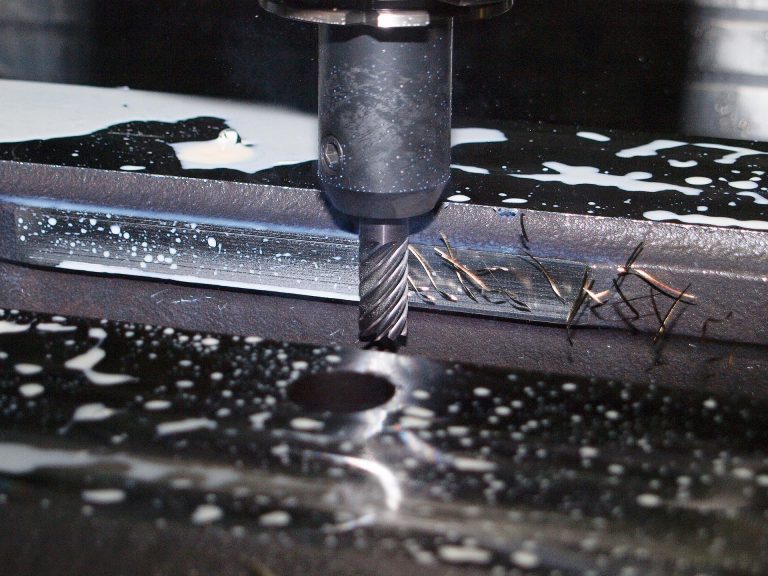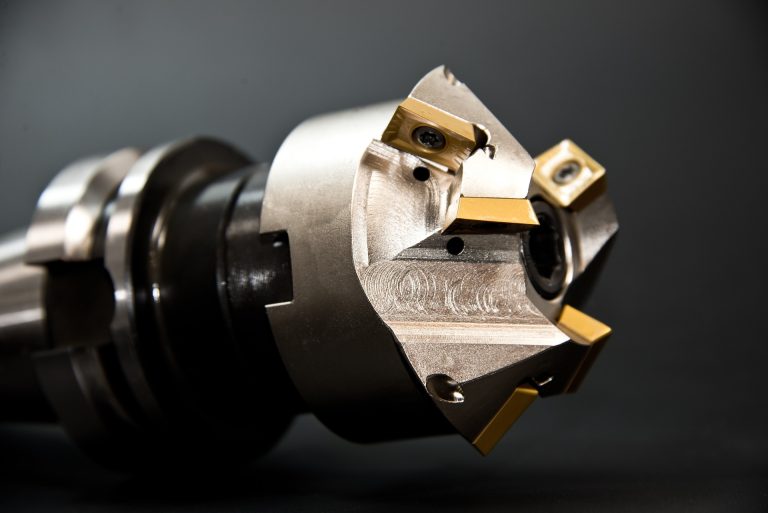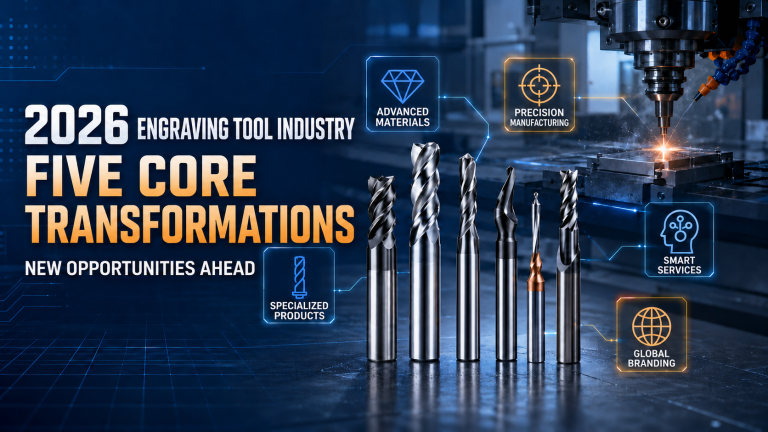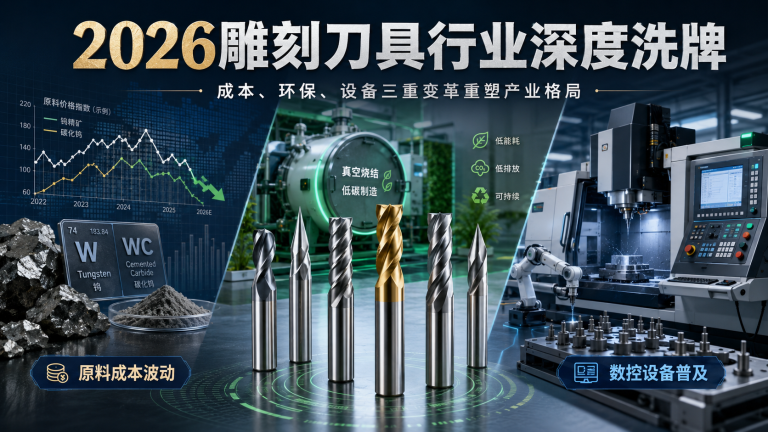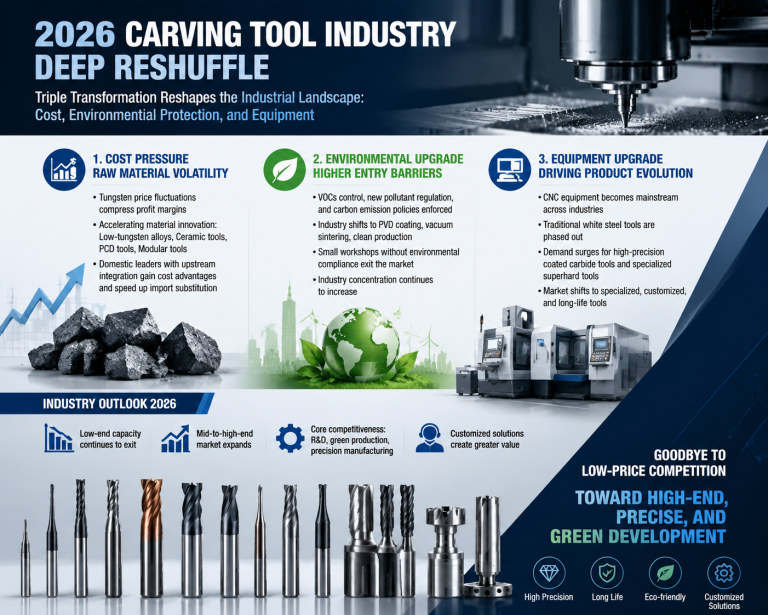
CNC carving tools help manufacturers and craft workshops cut, engrave, groove, shape, and finish a wide range of materials with repeatable accuracy. Choosing the right cutter geometry, flute design, diameter, and cutting parameters improves edge quality, tool life, and production efficiency.
Common Applications of CNC Carving Tools
In advertising production, CNC carving tools are widely used for lettering, logo engraving, sign making, channel letters, and decorative panels. Tapered engraving bits support fine details, while single-flute cutters provide clean chip evacuation in acrylic, PVC, and plastic boards. Correct spindle speed and feed rate help reduce melting, burrs, and chipped edges.
Woodworking shops use these cutters for relief carving, grooves, furniture components, cabinet doors, ornaments, and custom craft products. Spiral cutters are useful for efficient material removal, while ball-nose and tapered ball-nose tools create smooth three-dimensional surfaces. Prayer bead cutters and compact forming tools also support repeatable production of wooden beads, jewelry parts, and decorative accessories.
Engraving, Sign Making, and Acrylic Processing
For detailed engraving, a small cutting edge can reproduce fine lines and sharp corners. Acrylic processing usually benefits from polished cutting edges and stable chip removal. The tool should match the sheet thickness, machine power, and required finish. A rigid setup minimizes vibration and protects delicate features during long production runs.
Woodworking, Furniture, and Craft Production
For wood and engineered panels, operators select cutters according to grain direction, cutting depth, and the desired top or bottom edge. Up-cut, down-cut, and compression geometries solve different chip-control problems. When producing reliefs or curved surfaces, a roughing pass followed by a finishing pass can shorten machining time without sacrificing detail.
How to Select CNC Carving Tools
Start with the workpiece material and the final feature. Consider cutting-edge diameter, shank diameter, flute length, overall length, coating, and machine collet size. Shorter tool projection generally improves rigidity. For best results, use secure workholding, confirm tool runout, and test conservative parameters before increasing production speed.
- Match cutter geometry to acrylic, plastic, wood, composite, or non-ferrous material.
- Choose a diameter that can reach the smallest required detail without excessive deflection.
- Balance spindle speed, feed rate, depth of cut, and chip load.
- Inspect the cutting edge and replace worn tools before finish quality declines.
CNC Carving Tools Supplier in Guangzhou, Guangdong
JEEFOO supplies CNC carving tools from Guangzhou, Guangdong, China, serving distributors, sign makers, woodworking factories, and CNC users worldwide. Buyers can discuss material, machine type, tool dimensions, and application requirements before ordering. Explore our CNC cutting tool range for related engraving, routing, and milling solutions.
Frequently Asked Questions
Which tool is suitable for detailed CNC engraving?
Tapered engraving bits and small-diameter carbide cutters are common choices for fine lettering and detailed patterns. The best option depends on material hardness, required depth, corner radius, and machine stability.
How can tool life be improved?
Use the correct chip load, avoid excessive tool projection, keep the collet clean, and maintain effective chip removal. Tool wear accelerates when heat, vibration, or recutting chips are not controlled.
Can one cutter process every material?
No. Cutter geometry and operating parameters should be matched to the material and finish requirement. Dedicated tooling usually delivers cleaner edges, more stable machining, and longer service life. General CNC background is available from this numerical control overview.