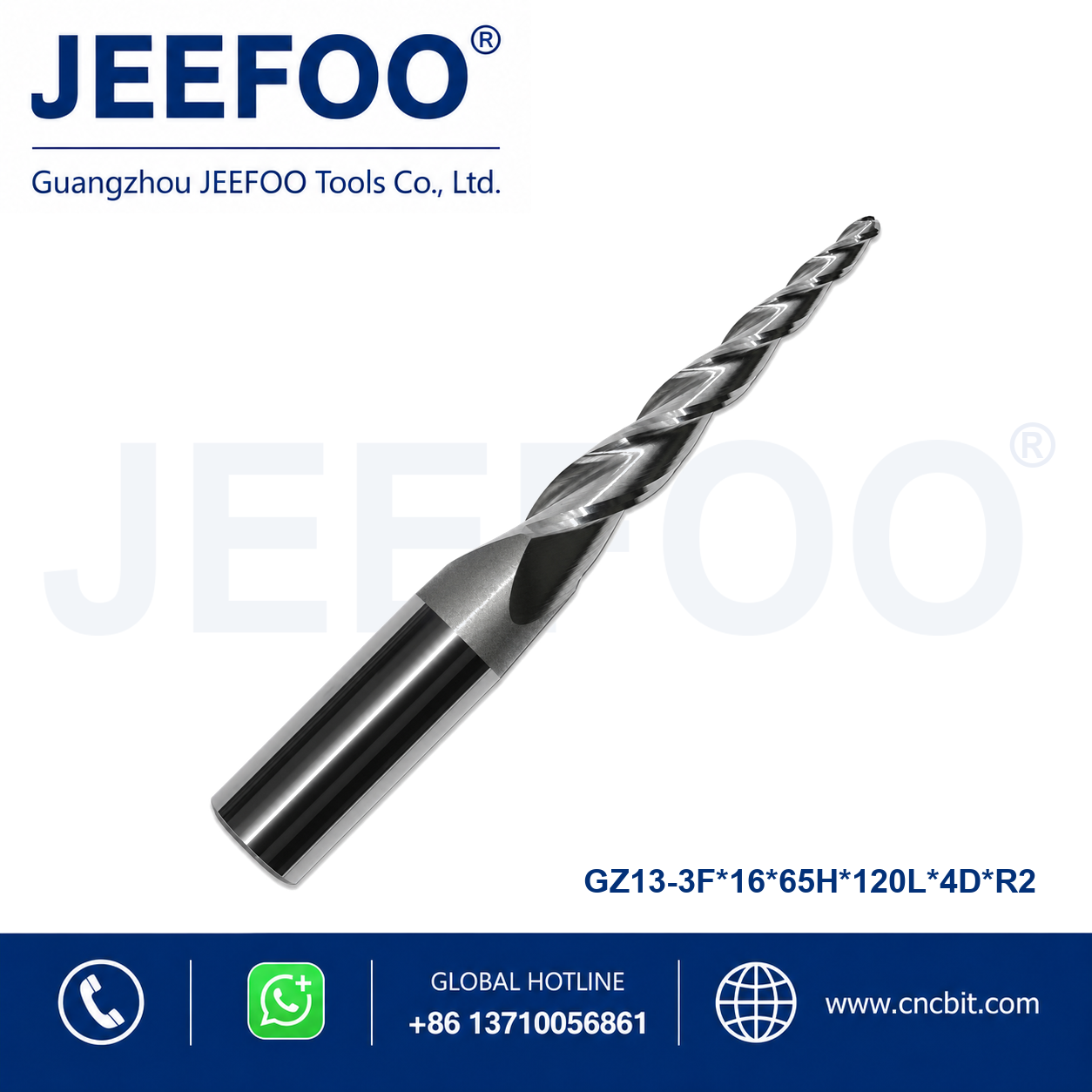
How a Tapered Router Bit Works
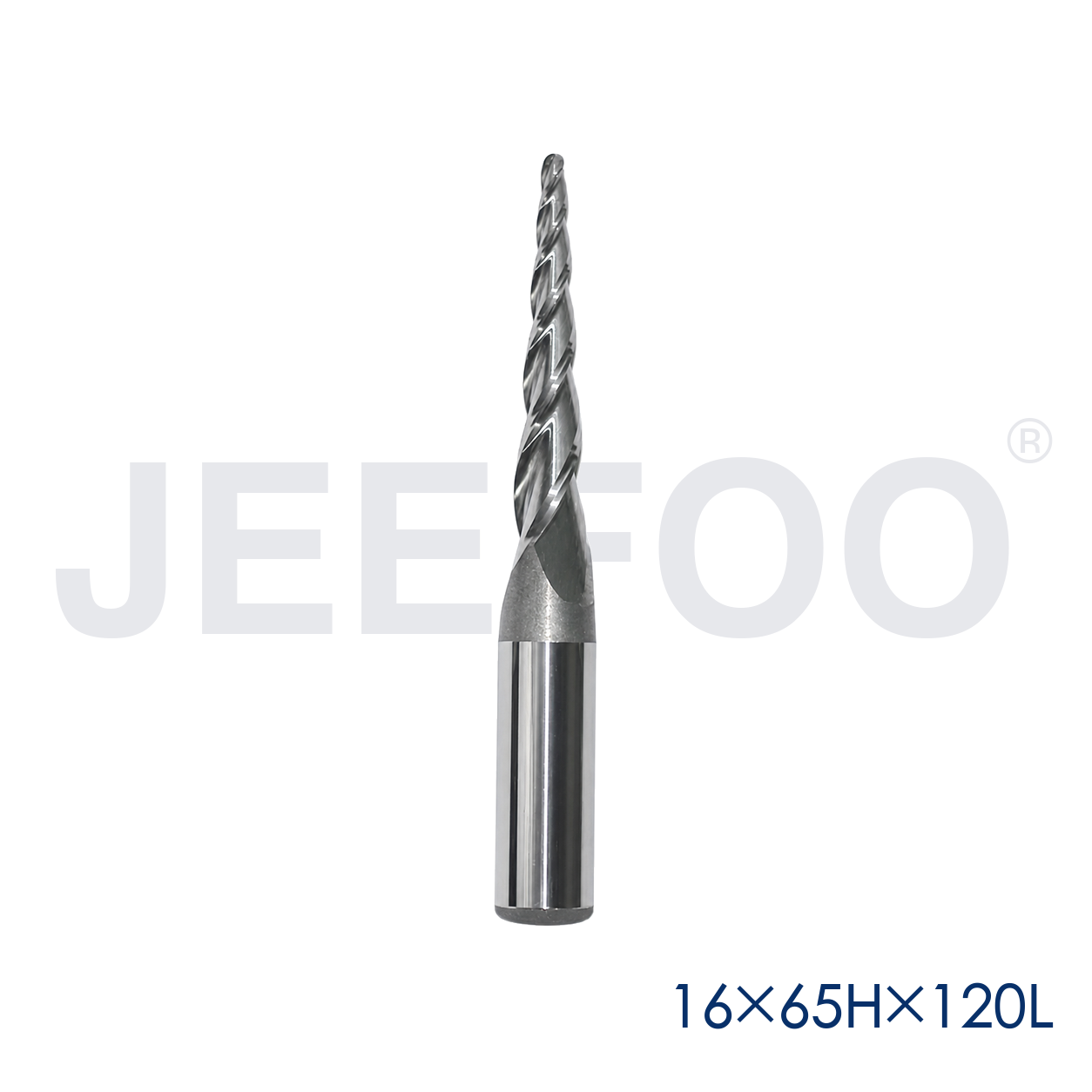
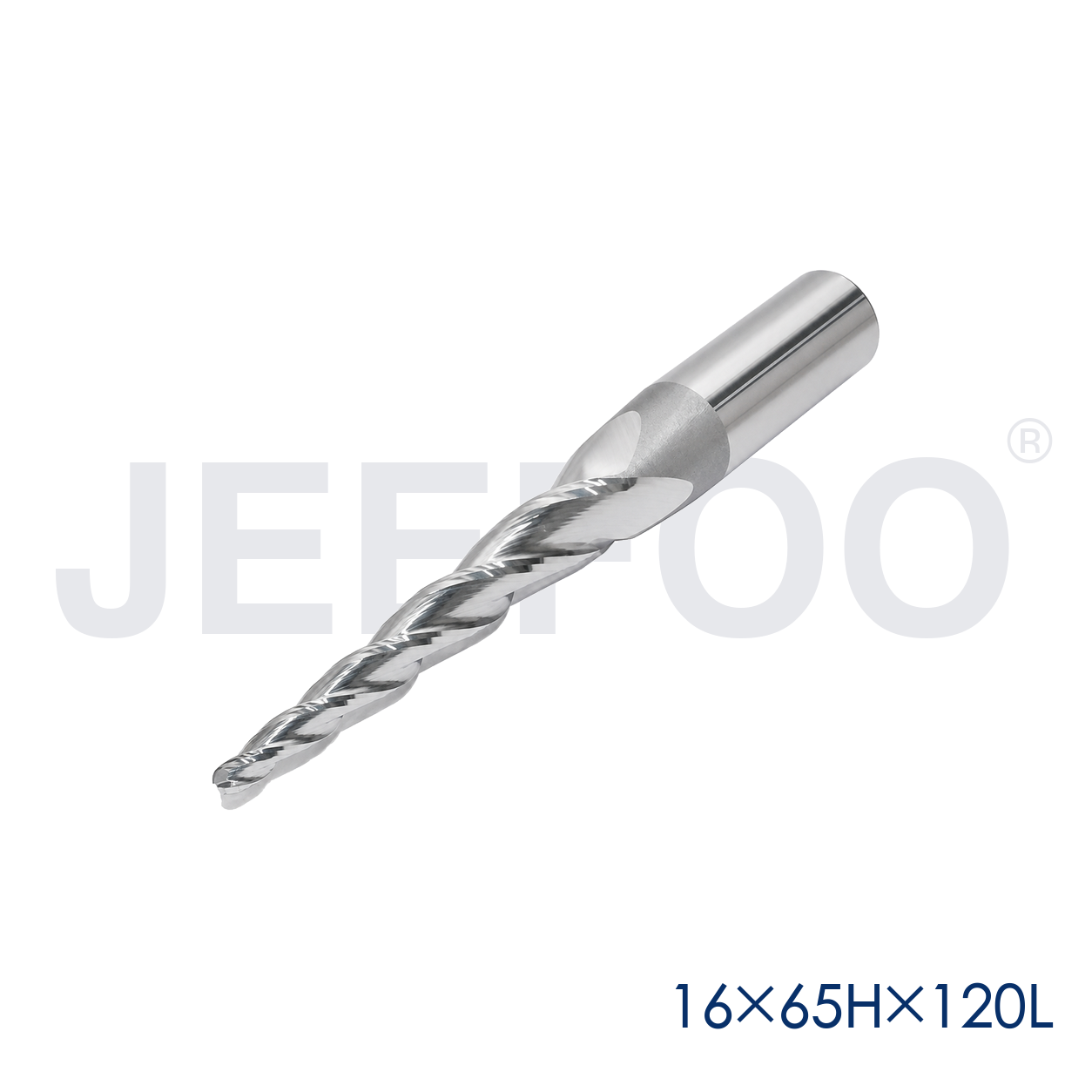
A tapered router bit uses an angled cutting profile to machine sloped walls, draft surfaces, deep reliefs and contoured cavities that cannot be produced efficiently with a straight cutter. This three-flute spiral design combines a 16 mm nominal size, 65 mm working height, 120 mm overall length, 4 degree taper and R2 tip radius. Confirm every dimension against the drawing and holder before machining.
Three-Flute Spiral Cutting Geometry
Three cutting edges can support a stable finish and distribute cutting load when chip space, spindle power and feed are properly matched. The spiral flutes help guide chips away from the active cutting zone. Because the tool has a long working height, setup rigidity and controlled engagement are especially important. The R2 tip creates a radiused transition instead of a sharp point, helping finish curved details and internal corners.
The 4 degree taper should be included in the CAM tool definition so the programmed wall angle matches the actual cutter. Do not substitute a straight or differently tapered tool without recalculating the toolpath. Check clearance at the widest part of the head and along the shank, particularly in deep cavities where nearby walls can interfere with the tool or holder.
Applications for Deep CNC Routing
A tapered router bit can be used for compatible woodworking, composite, plastic, mold, pattern and 3D relief applications that require draft or flowing surfaces. Typical tasks include tapered pockets, curved sidewalls, sculpted panels, large relief carving and finishing passes. Material compatibility and final parameters must be confirmed for the actual workpiece, machine and cutter coating or edge preparation.
Remove excess stock with a suitable roughing tool when possible, then leave a consistent allowance for the tapered finishing pass. A controlled allowance reduces sudden changes in cutting load along the 65 mm working height. Use a stepover selected for the required surface finish, tool radius and production time, and verify the result on scrap or a test component.
Setup, Runout and Workholding
Clean the collet, nut and spindle taper before loading the cutter. Clamp only the straight shank and keep overhang to the minimum needed for clearance. Long-reach tools amplify runout and vibration, so inspect the holder and measure runout when accuracy matters. Secure the workpiece against lifting and movement, then simulate the toolpath above the part before cutting.
Start with conservative speed, feed, axial depth and radial engagement based on the cutter, machine and material supplier guidance. Adjust one factor at a time while monitoring sound, chip form and surface quality. Chips and dust must leave the cutting zone; recutting can increase heat, wear and deflection. Stop if chatter develops and review overhang, holder condition and engagement before continuing.
Quality Control and Tool Life
Inspect the first machined wall angle, tip radius and depth using the method specified by the drawing. Record the holder, gauge length, spindle speed, feed, depth, stepover and finishing allowance for a proven process. Replace the cutter when wear, buildup or chipped edges begin to affect surface finish or geometry. Always inspect the tool after a collision.
JEEFOO Support from Guangzhou, China
JEEFOO supplies CNC cutting tools from Guangzhou, China for distributors, workshops and OEM projects. Buyers can review related CNC router bits and provide the material, drawing, machine, holder and required finish when requesting confirmation of the 16x65Hx120Lx4°xR2 specification. For process planning, consult established milling knowledge resources and the machine manufacturer.
Frequently Asked Questions
What does the 4 degree specification mean? It identifies the designed taper angle. Enter the exact geometry in CAM and confirm how the supplier defines the angle before programming.
Why is rigidity important? The long working height increases leverage, so low runout, short practical overhang and stable workholding are essential.
What does R2 indicate? It describes a 2 mm tip radius that creates a rounded transition rather than a sharp point.
three flute spiral tapered router bit is designed for stable CNC machining, clean cutting and dependable tool performance.
<three flute spiral tapered router bit CNC Applications
!– wp:paragraph –>Three cutting edges and tapered geometry suit relief carving and precision engraving.
Suitable for professional engraving, milling and precision processing with compatible CNC equipment.
Size: 16x65Hx120Lx4°xR2