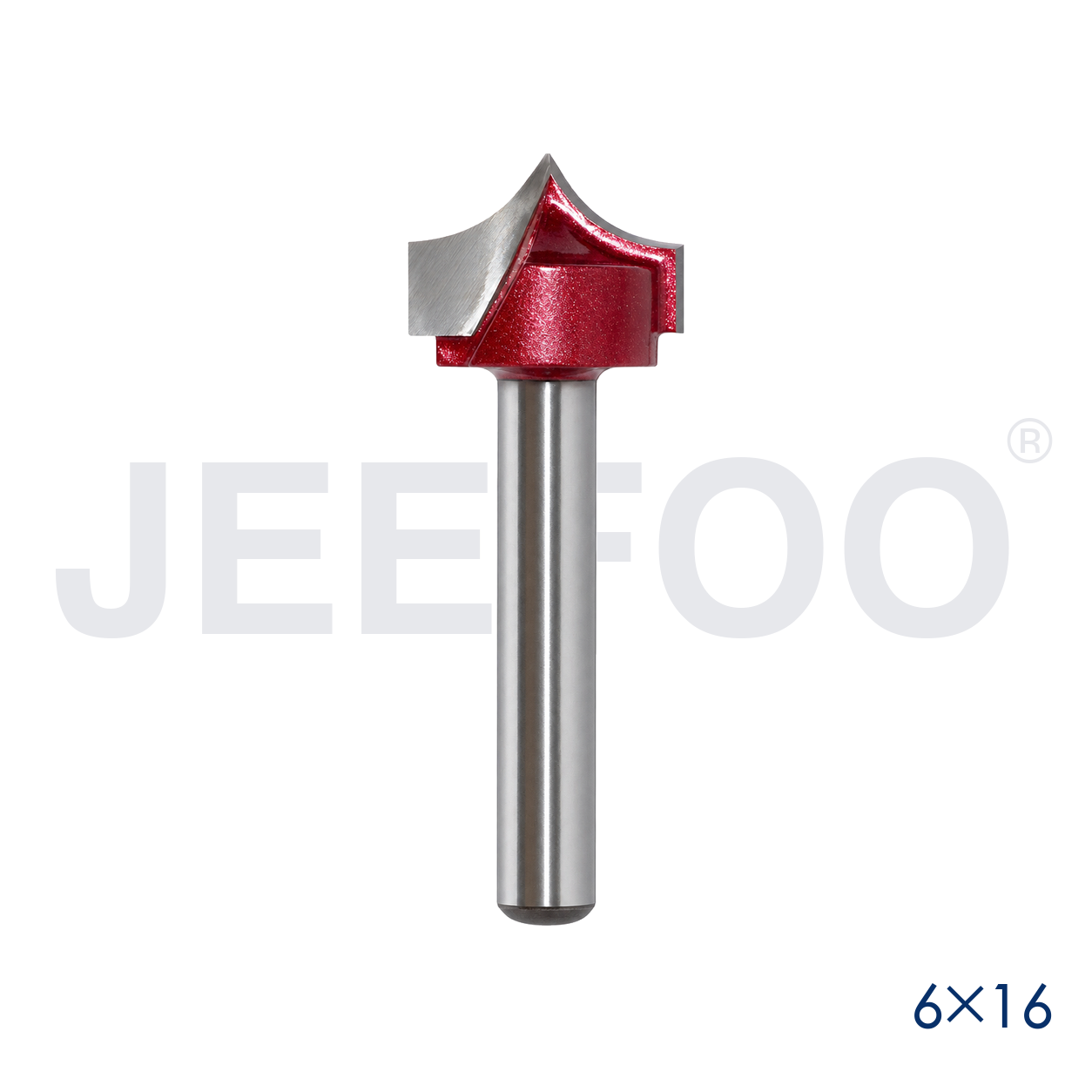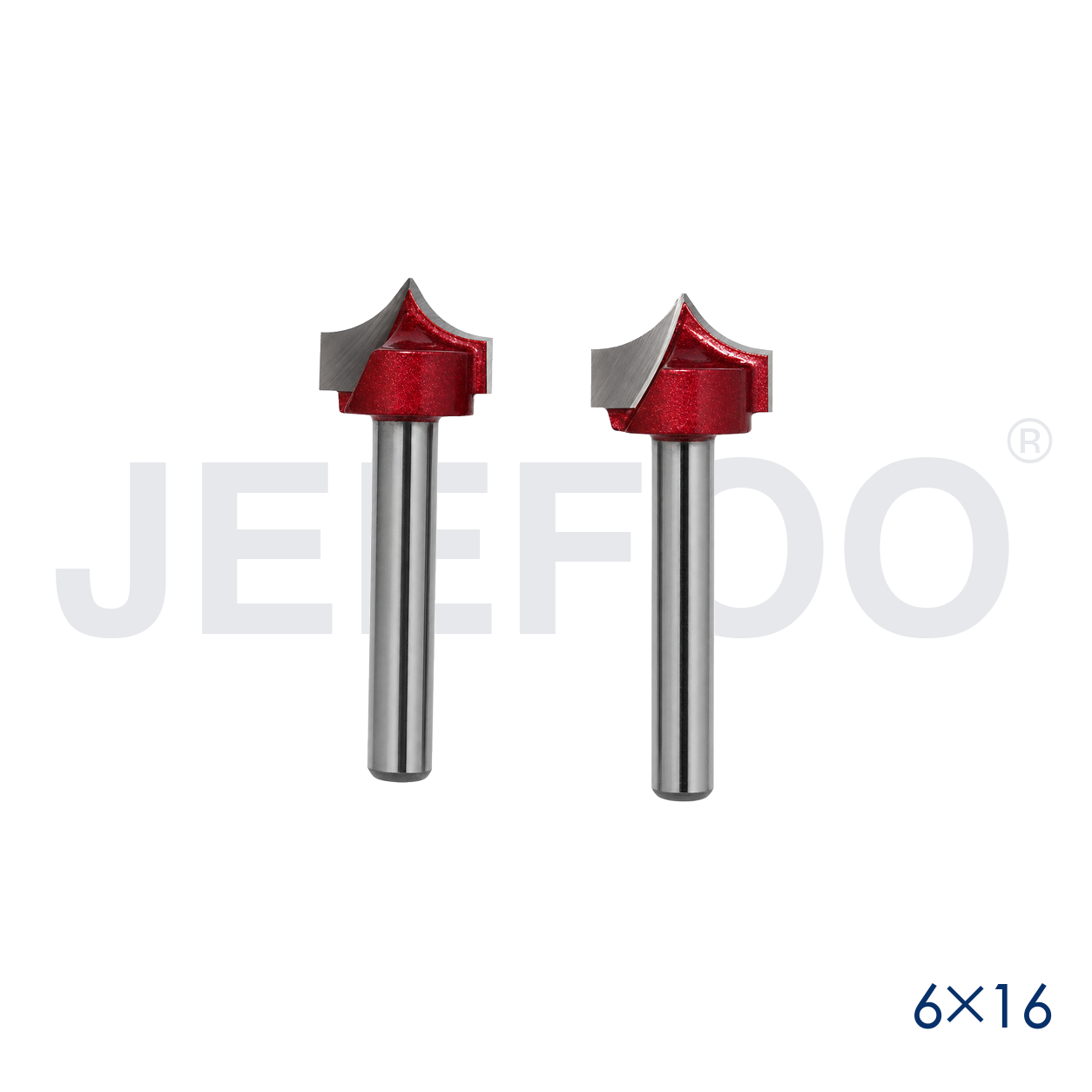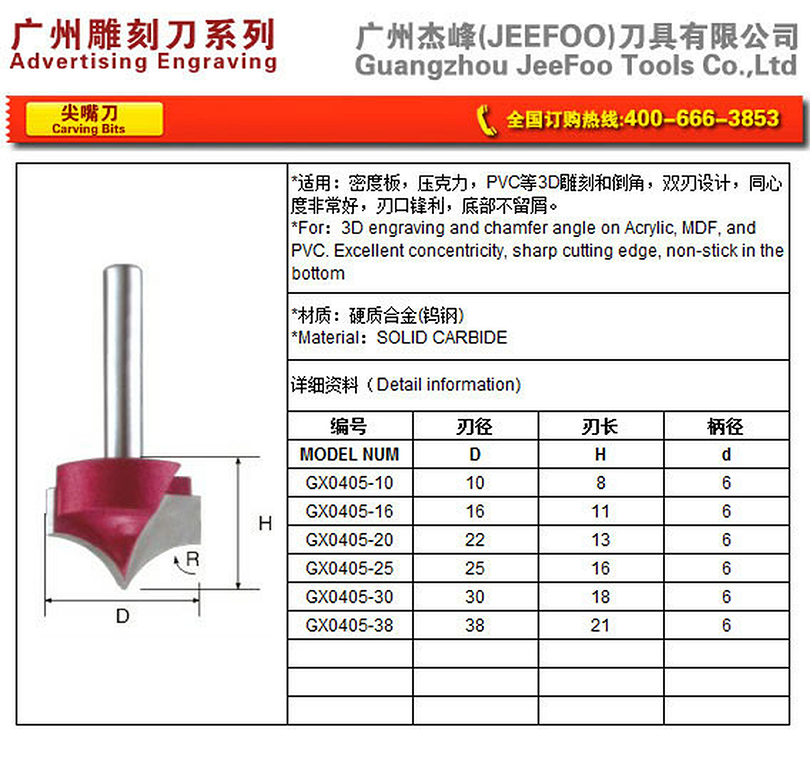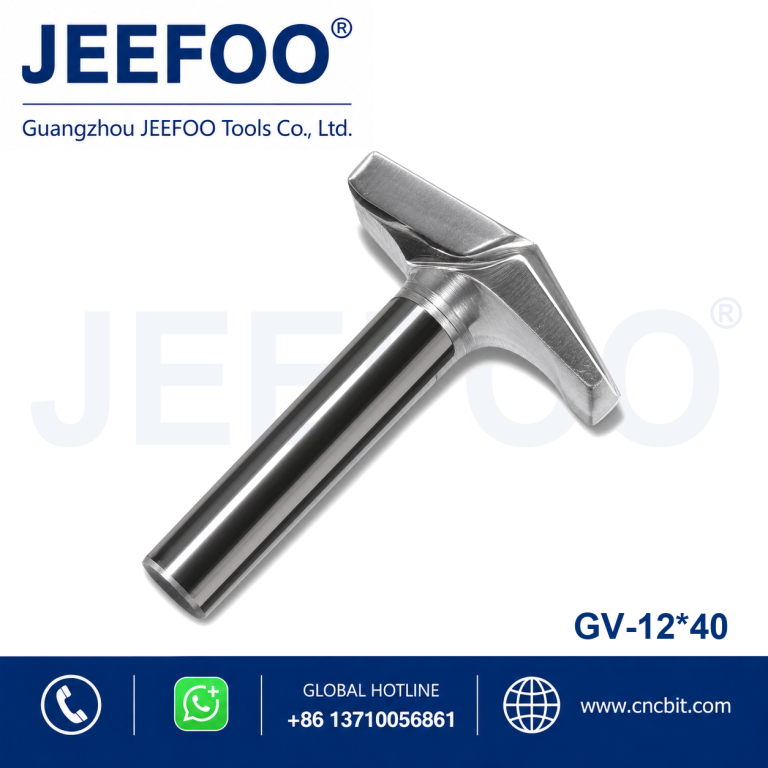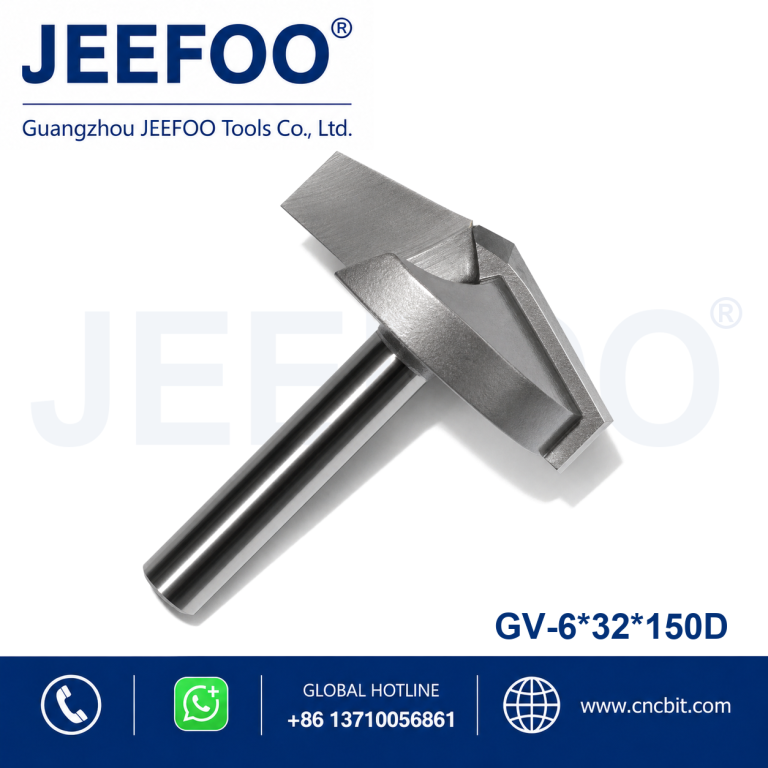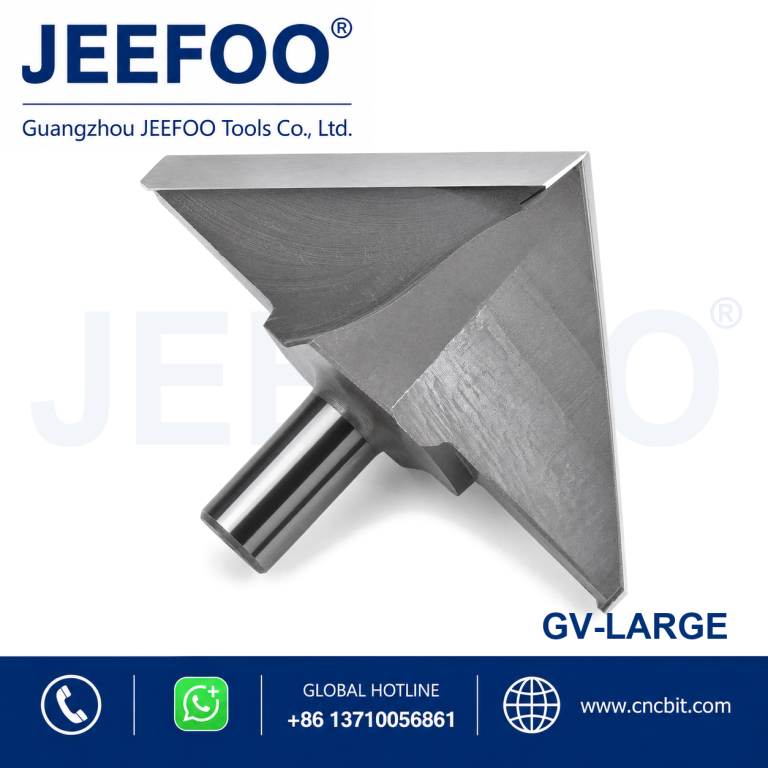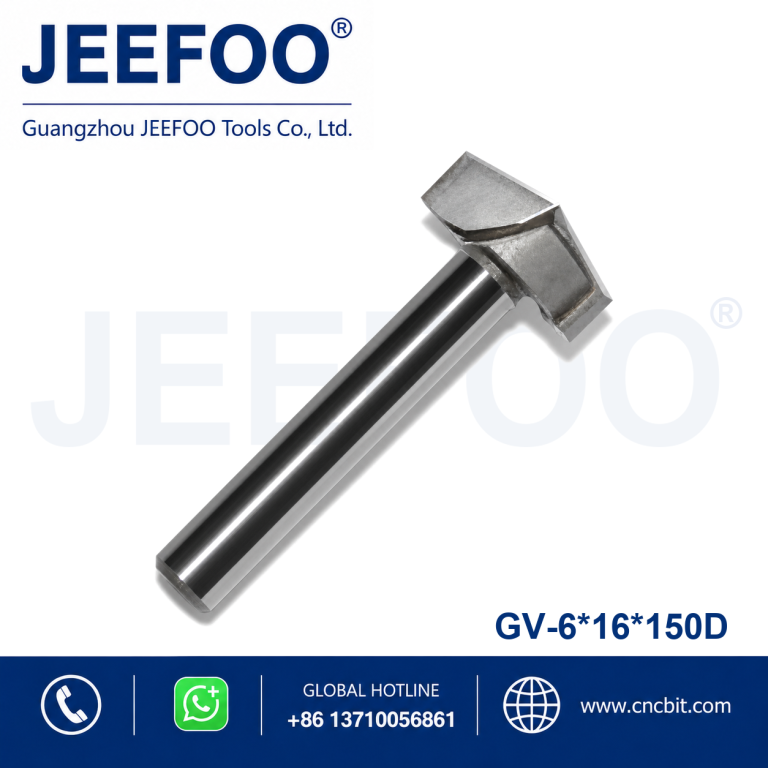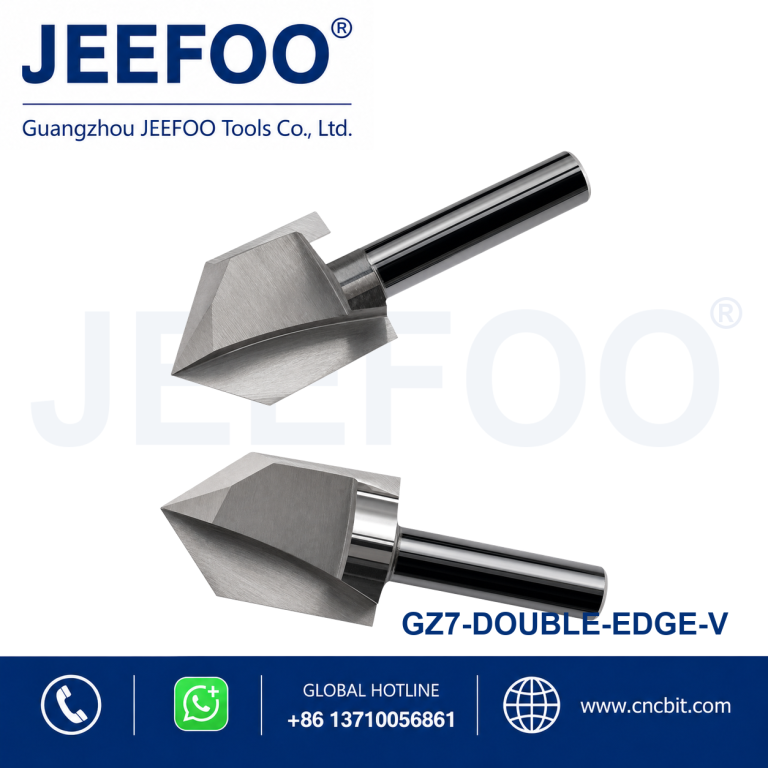
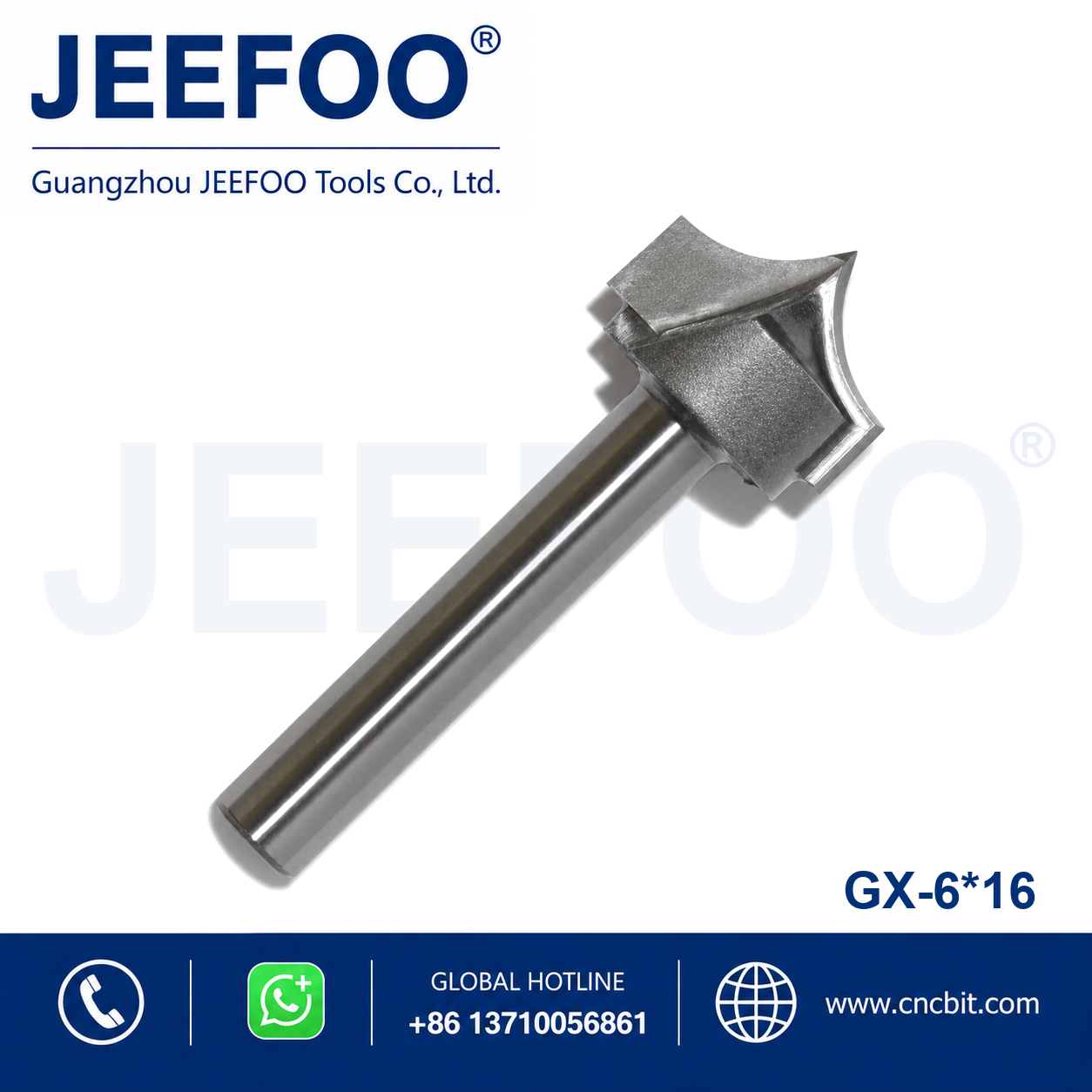
6×16 Tungsten Carbide Needle Nose Cutter is a precision CNC carving tool designed for detailed woodworking, profiling and fine engraving. Its needle-nose geometry helps reach narrow areas and create accurate decorative features.
Needle Nose Carving Bit Features
- The tungsten carbide cutting face provides strong abrasion resistance and dependable edge life.
- Precision CNC grinding supports accurate dimensions and consistent cutting performance.
- Controlled concentricity helps reduce vibration and improve the machined surface.
- Suitable geometry for fine carving, relief work, profiling and detailed lettering.
- Standard specifications and customized tool designs are available.
Materials and Applications
This 6×16 carving bit is suitable for wood, PVC, plastic, melamine panel and compatible composite materials. With correct machine settings, it produces a smooth cutting surface with reduced chipping and supports both workshop and production CNC routing.
- Fine engraving, decorative carving and relief machining.
- Wood and panel profiling with narrow or detailed contours.
- PVC and plastic cutting on compatible CNC router systems.
- Furniture, advertising, signmaking and custom woodworking applications.
- OEM and ODM specifications for special profiles and production needs.
Cutting Guidance
Use a clean, correctly sized collet and keep tool overhang as short as practical. Secure the workpiece firmly, check spindle runout and select spindle speed, feed rate and cutting depth according to the material. Multiple controlled passes are recommended for deep or delicate features.
6×16 Tungsten Carbide Needle Nose Cutter Overview
A tungsten carbide needle nose cutter uses a tapered, narrow cutting profile to reach detailed areas that are difficult for a standard straight router bit. The 6×16 specification is intended for precision CNC woodworking, decorative carving, profiling and fine engraving. It can help produce narrow valleys, controlled slopes and smooth transitions on compatible wood, plastic and composite materials.
Typical CNC Woodworking Applications
This cutter can support relief carving, furniture decoration, sign work, patterned panels, molds, prototypes and customized woodworking components. It may also be suitable for PVC, plastic, melamine panels and compatible composites when the edge geometry and machining parameters are correct. Actual performance depends on material density, abrasiveness, clamping, spindle condition and programmed cutting load.
Use a controlled roughing strategy before the final detail pass when removing a large amount of material. Leave a consistent finishing allowance so the needle profile does not carry an excessive load. A smaller stepover can improve surface quality on detailed contours, while multiple shallow passes reduce stress on the tip during deep or delicate work.
Setup, Cutting Parameters and Safety
Install the tool in a clean, correctly sized collet and keep overhang as short as the required depth allows. Check spindle runout and secure the workpiece firmly. Begin with conservative feed rate, spindle speed and pass depth, then observe chip formation, cutting sound, vibration and finished-surface quality. Adjust one parameter at a time and record the approved production settings.
Effective dust extraction keeps the cutting path visible and reduces chip recutting. Stop the machine if unusual noise, burning, chipping or excessive vibration appears. Do not force the narrow tip into an aggressive full-depth pass. Follow machine and workplace safety rules, and make a sample cut whenever a new material or program is introduced.
Carbide Quality, Inspection and Storage
Carbide grade, grinding quality and edge preparation influence rigidity and tool life. Buyers can review the general properties of tungsten carbide when comparing wear resistance. Inspect the cutting tip under good lighting before each job and replace a chipped, bent or heavily worn tungsten carbide needle nose cutter before production continues.
Clean resin or dust using an appropriate workshop method, keep the cutter dry and store it in a protective case. Prevent the cutting edges from touching other tools during handling or transport. A documented inspection routine helps workshops and distributors compare tool life, cycle time, edge quality and repeat-order consistency.
JEEFOO Supplier in Guangzhou, China
JEEFOO supplies CNC woodworking and engraving tools from Guangzhou, China for distributors, workshops and manufacturers. Send the material, drawing, machine details, required dimensions, quantity, labeling and packaging needs for selection support. Standard JZD-series tools and customized options can be discussed. Browse more JEEFOO CNC router bits for related applications.
Frequently Asked Questions
What is a needle nose cutter used for?
It is used for narrow relief details, tapered features, fine profiles and decorative CNC carving where a conventional straight tool cannot reach.
Can JEEFOO provide a customized specification?
Yes. Provide the drawing, material, machine, required dimensions and quantity. The Guangzhou team can review a standard or customized tungsten carbide needle nose cutter.
Product Description
- Product name: 6×16 Tungsten Carbide Needle Nose Cutter.
- Material: Tungsten Carbide cutting face.
- Manufacturing: Precision CNC grinding with controlled concentricity.
- Applications: Wood, PVC, plastic, melamine panel and compatible materials.
- Performance: Smooth carving and reduced edge chipping with suitable machining parameters.
- Supply: Various standard specifications and customized designs are available.
Size: 6×16