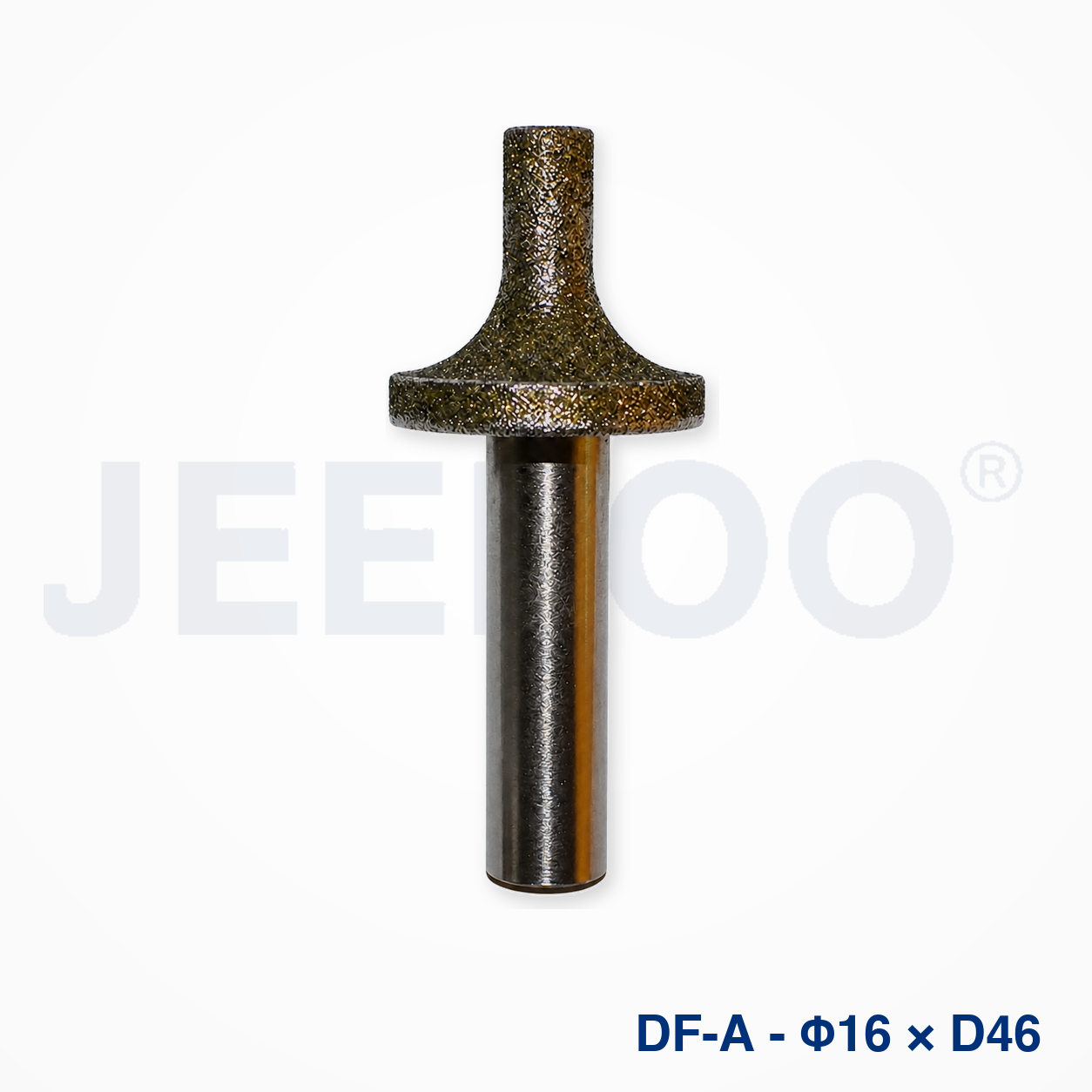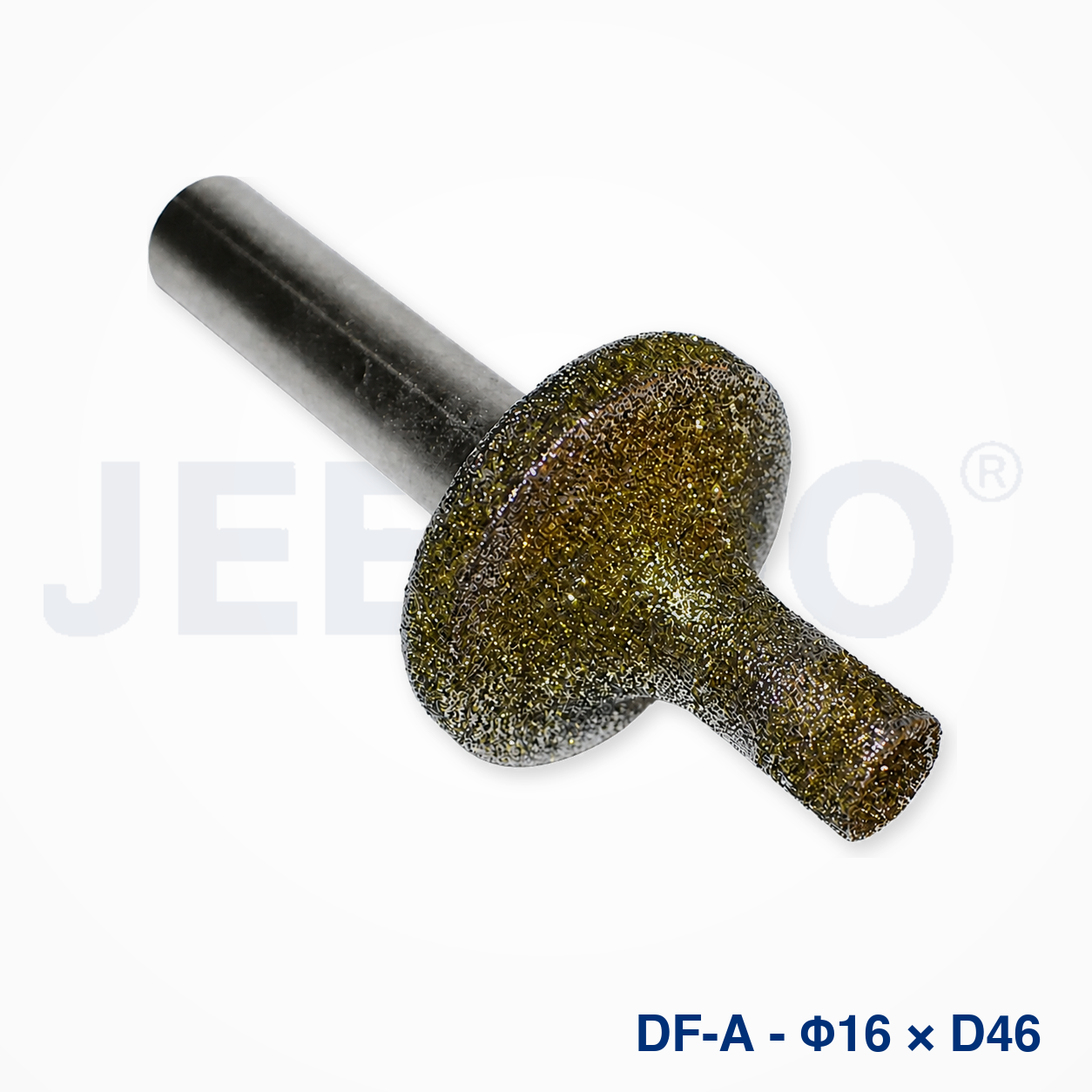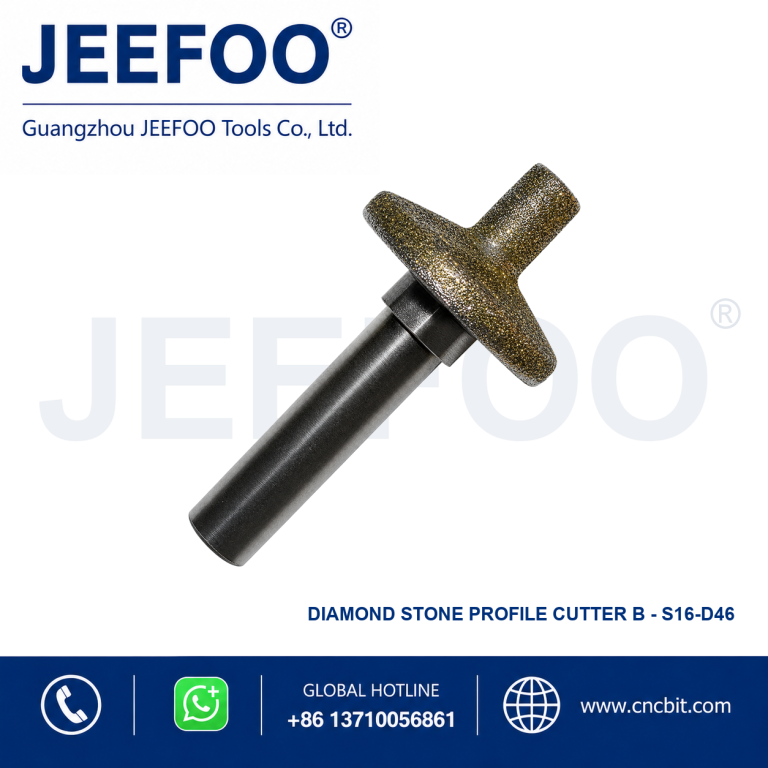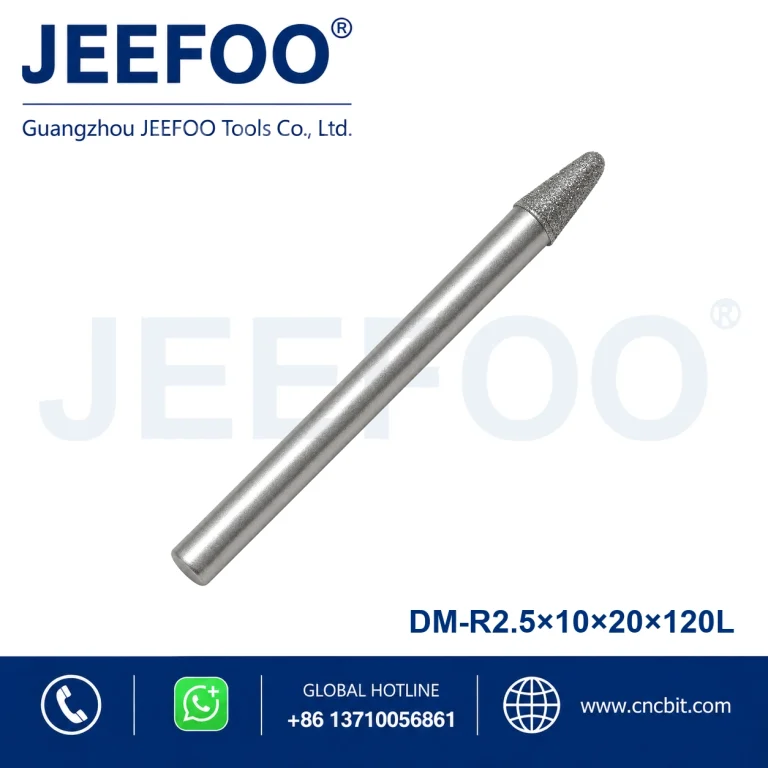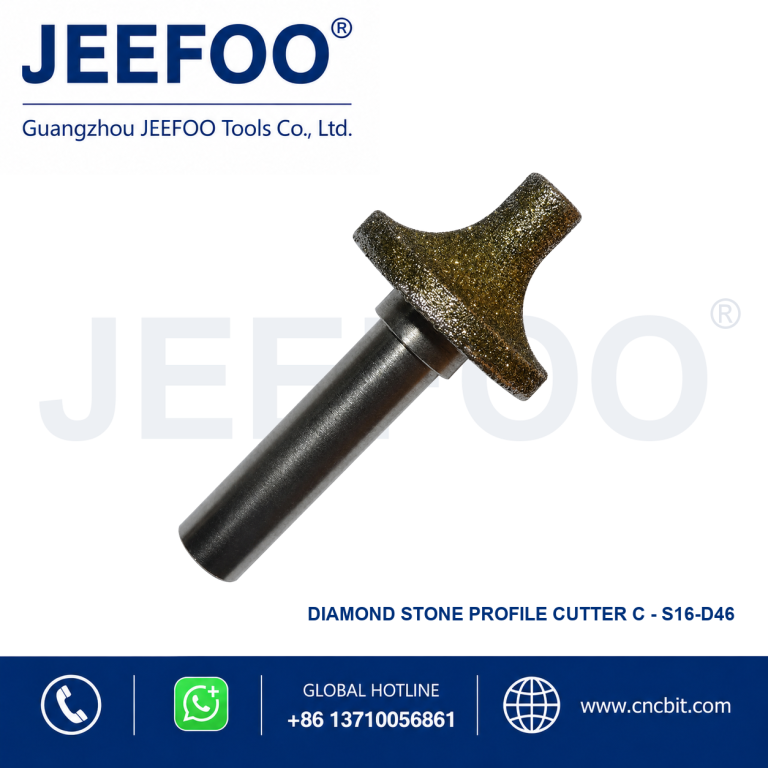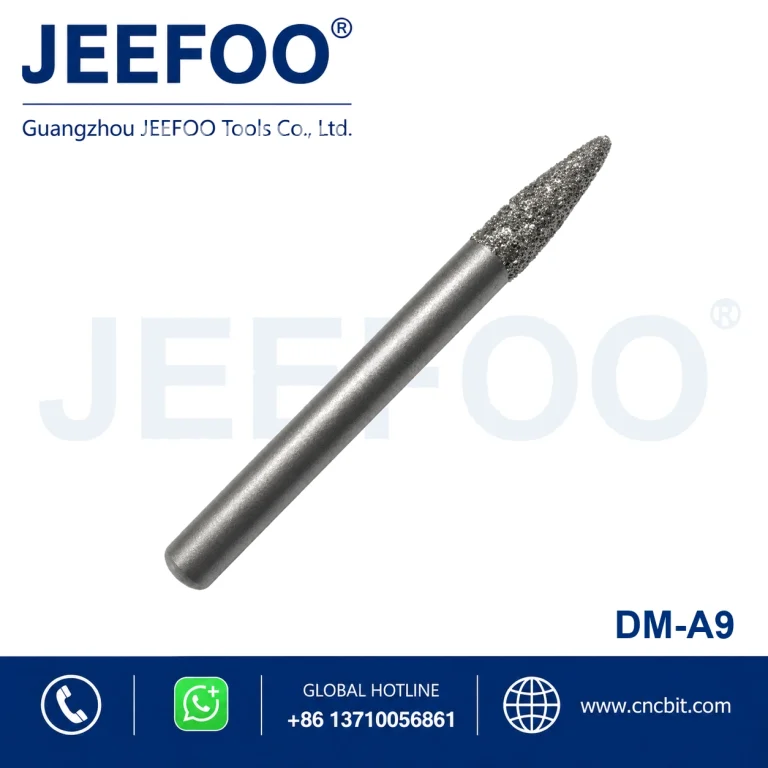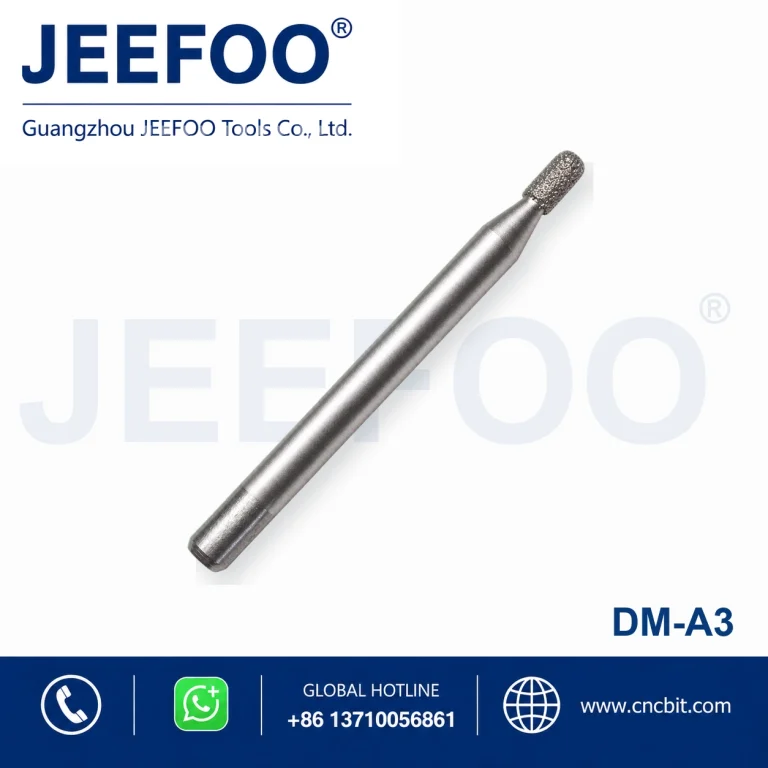
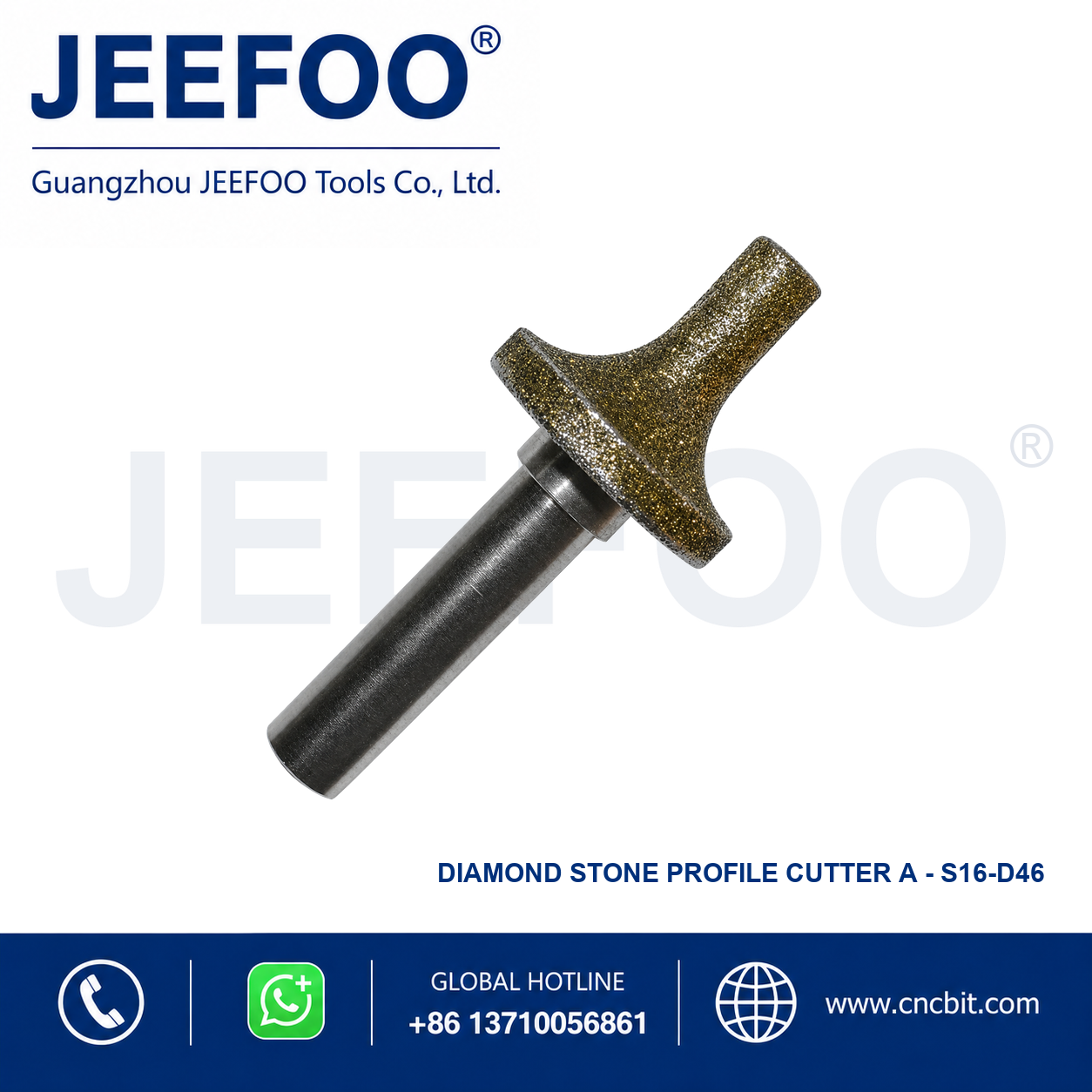
16mm D46 A-Type Diamond Stone Forming Bit Guide
The diamond stone forming bit is a profile tool for shaping consistent A-type edges in marble, limestone and compatible engineered stone. This 16 mm D46 model combines a defined forming contour with fine diamond abrasive so operators can remove material predictably while preparing a cleaner edge for later polishing. It is designed for controlled contour work rather than deep straight cutting.
What Is This Forming Bit Used For?
Use the diamond stone forming bit when a drawing calls for an A-type stone profile, repeatable edge geometry or light corrective shaping. Typical jobs include countertop edge preparation, decorative marble components, stone signs and architectural pieces. The exact result depends on the machine, stone hardness, coolant delivery and the amount of stock left for the finishing pass.
Machine Setup and Cutting Method
- Confirm that the spindle, collet and tool holder are clean and compatible with the bit shank.
- Check runout before cutting because excessive runout creates uneven diamond wear and visible profile marks.
- Use continuous coolant directed at the contact zone to carry away stone slurry and control heat.
- Begin with conservative feed and shallow engagement, then adjust from the sound, spindle load and edge quality.
- Use a roughing pass followed by a lighter finishing pass instead of forcing the full profile in one cut.
How to Improve Edge Quality
Secure the workpiece firmly and keep the tool path smooth through corners. Chipping usually indicates excessive engagement, vibration, inadequate coolant or a feed that does not suit the stone. If the edge looks cloudy or scratched, inspect the diamond surface for loading and verify that slurry is leaving the cut. A light final pass can reduce tool marks and make the following polishing stages more efficient.
Material and Process Checks
Test the diamond stone forming bit on an offcut whenever the stone batch or resin content changes. Natural marble may contain veins and weak areas, while engineered stone can react differently because of its binder. Keep the same tool orientation, datum and coolant conditions during production so the completed profiles remain consistent from part to part.
Care and Service Life
After machining with the diamond stone forming bit, flush away slurry, dry the metal body and examine the abrasive rim for abnormal wear. Do not allow the bit to strike clamps or fixtures. Store it separately from other tools so the profile is not damaged. Stable runout, sufficient cooling and reasonable engagement are the most important factors for maintaining useful cutting performance.
Buyer Checklist
Before ordering the diamond stone forming bit, confirm the 16 mm diameter, D46 grit, A-type profile, shank connection, working height and machine clearance. Share the stone type, required edge drawing and expected finish with JEEFOO when application matching is needed. Correct specification prevents profile mismatch and reduces trial cuts during setup. Review more JEEFOO CNC tooling solutions, and follow recognized crystalline silica safety guidance when machining stone.
Frequently Asked Questions
Can it be used without water?
Use the cooling method specified for the machine and tool. For this type of diamond stone profiling, controlled coolant normally improves heat management, slurry removal and edge consistency.
Does D46 describe the profile size?
No. D46 identifies the diamond grit designation, while the 16 mm dimension and A-type description identify other parts of the tool specification. Confirm every dimension from the product drawing.
Product Description
This A-type diamond forming bit uses a 16 mm body and D46 diamond grit for profile shaping and edge preparation on marble and engineered stone. Its A-type working contour is intended for controlled stock removal along the specified edge form.
Use this tool on suitable CNC or stone-processing equipment for trimming, forming and refining stone edges. Confirm the required A-profile against the product drawing before machining.
Recommended Applications
- A-profile stone forming
- Marble edge trimming
- Engineered-stone contour machining