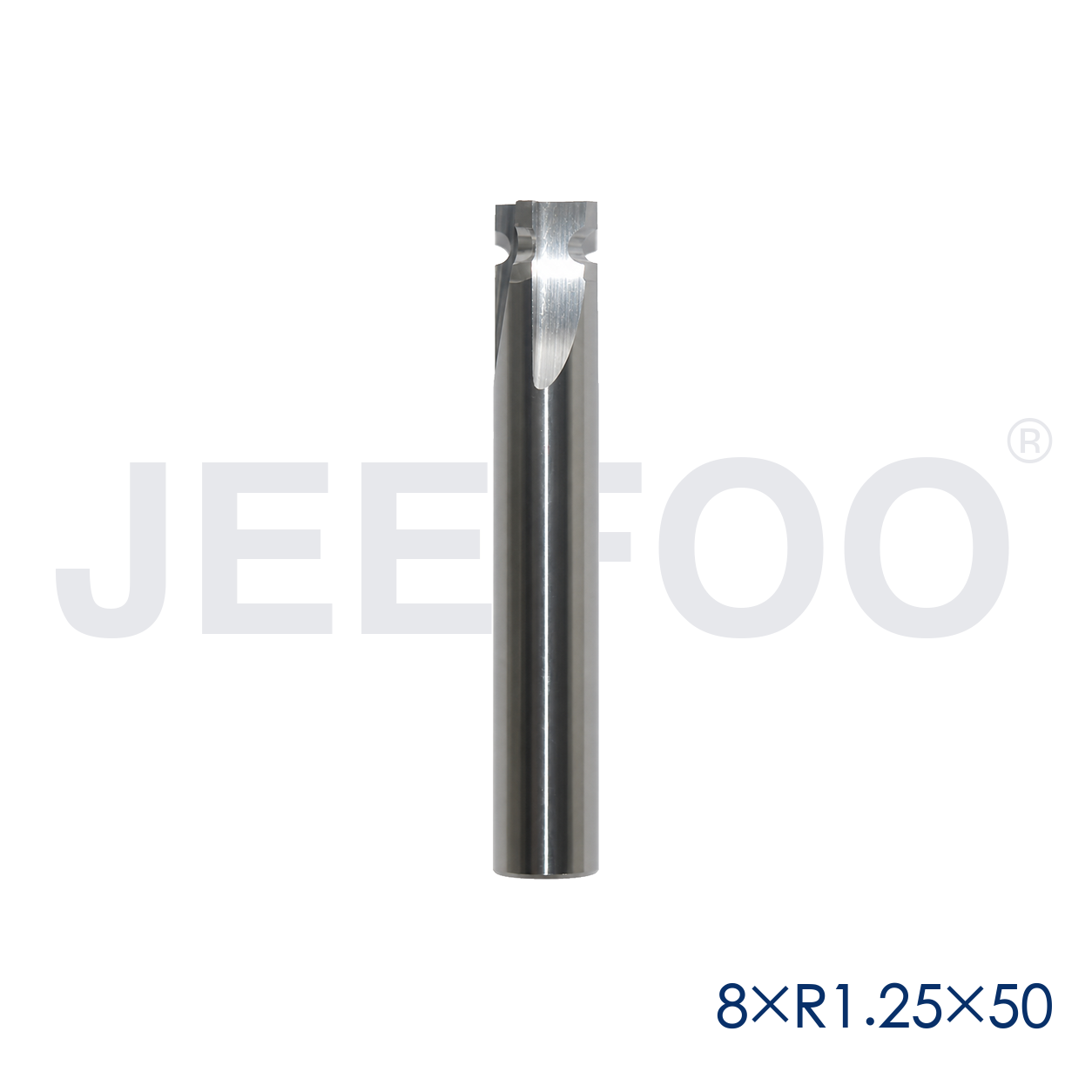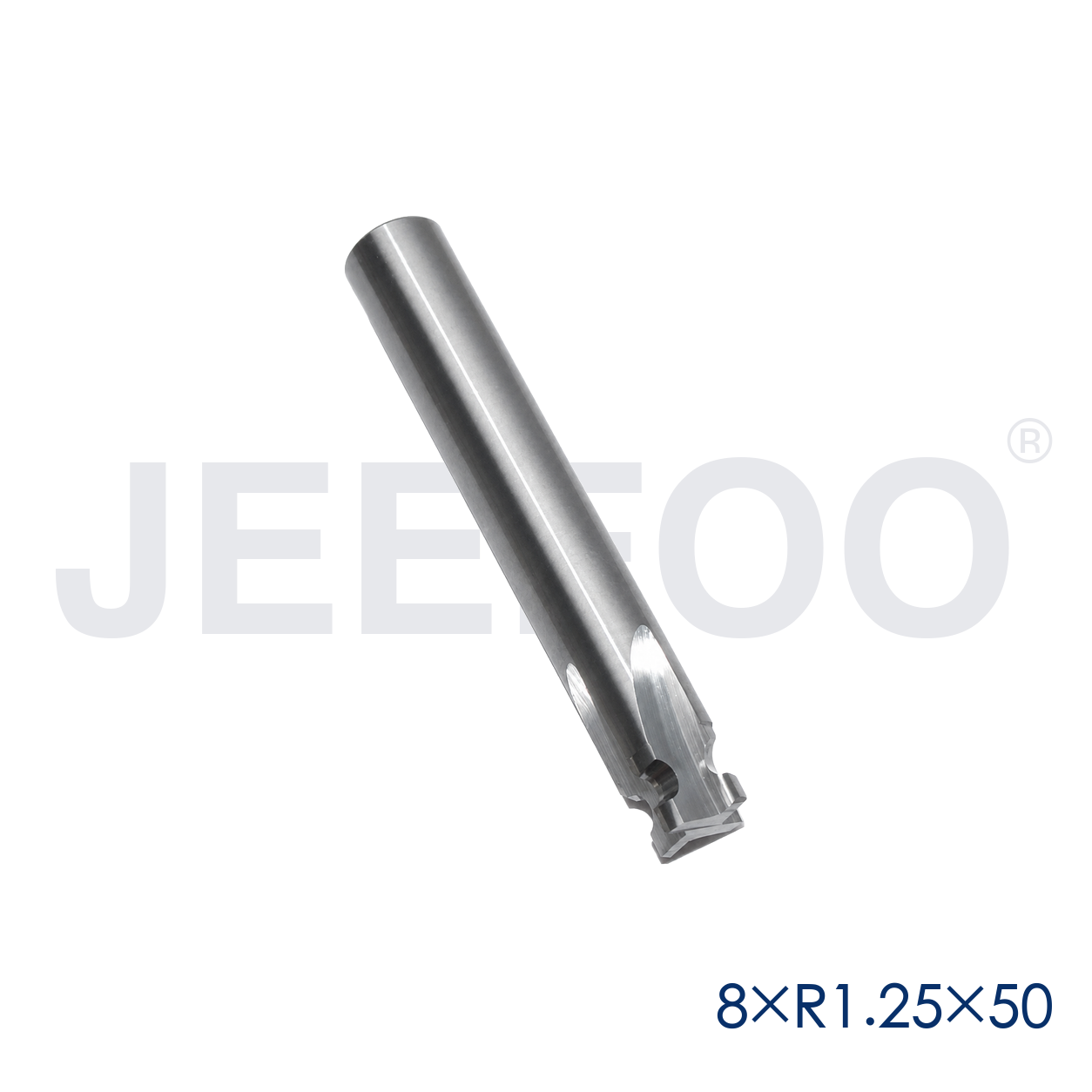
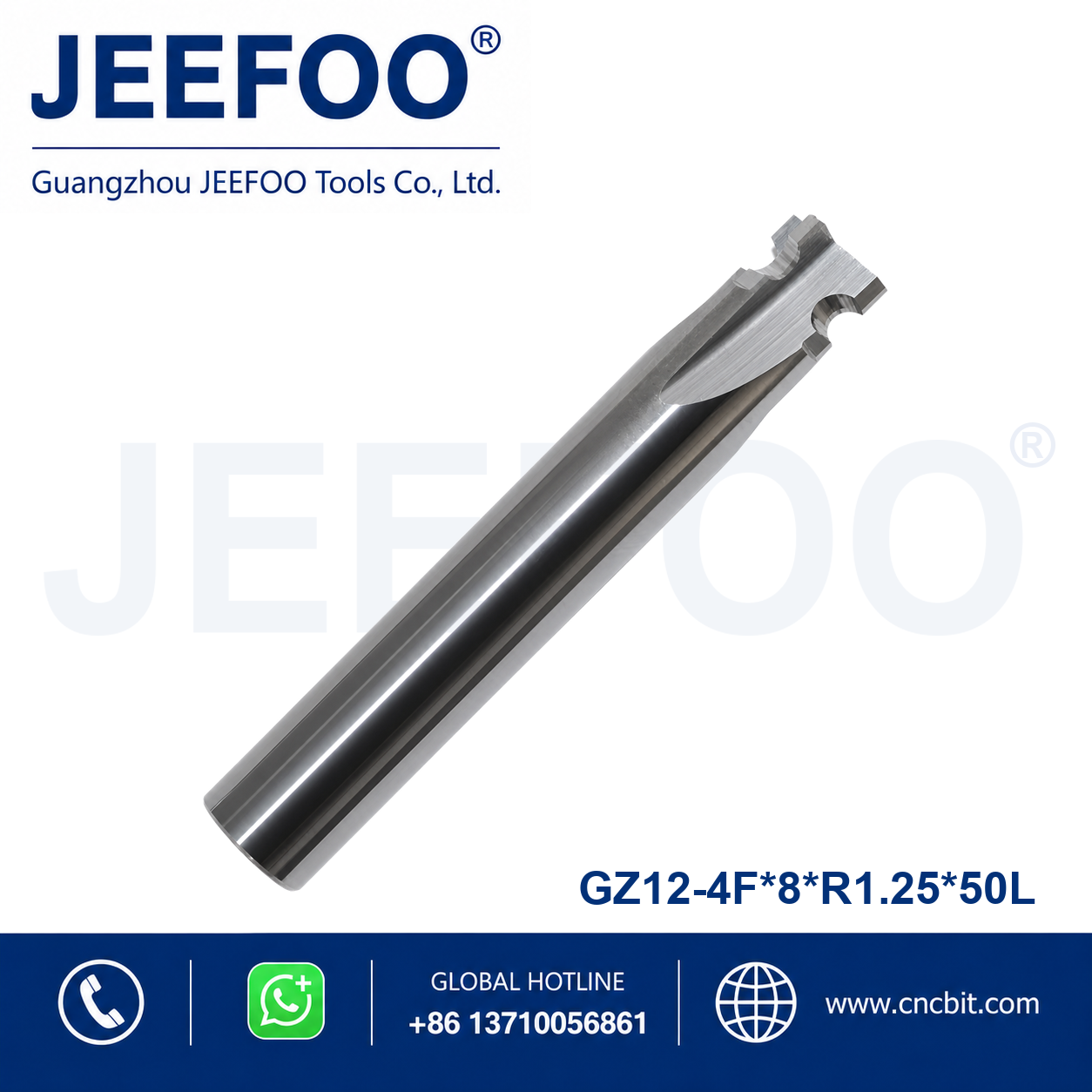
8xR1.25×50 Four Flute Inner R Cutter Guide
A four flute inner R cutter is designed to form a controlled concave radius or reverse-radius edge on aluminum components. The 8xR1.25×50 specification identifies the principal dimensions for tool selection, while the four cutting edges support stable finishing when runout, chip evacuation and tool engagement are correctly managed.
Typical Aluminum Applications
- Reverse-radius chamfers on aluminum plates and profiles
- Internal edge rounding after rough milling
- Decorative concave profiles and controlled corner transitions
- Repeat-production parts requiring consistent R1.25 geometry
Confirm that the cutter has clear access to the programmed edge. The neck, shank and non-cutting portions must not contact the workpiece or fixture. Verify the required radius and part tolerance from the drawing before machining.
Understanding 8xR1.25×50
The size denotes an 8 mm principal diameter, an R1.25 cutting radius and a 50 mm overall length. Check the supplier drawing for shank diameter, flute length, neck clearance and cutting direction. Use the measured tool dimensions in the CAM tool library and verify the programmed compensation on a test piece.
CNC Setup and Chip Control
Clean the collet and shank, confirm low spindle runout and clamp the aluminum workpiece rigidly. Rough the edge with a suitable end mill first, leaving a small and uniform allowance for the profile pass. Start with conservative engagement and increase only after the toolpath, finish and chip evacuation are stable.
Use air, mist or another coolant method approved for the aluminum grade and machine. Prevent chips from packing around the reverse-radius cutting edge. If the finish becomes smeared or noisy, inspect runout, chip welding, toolpath direction, engagement and edge condition before changing feed or speed.
JEEFOO Tools from Guangzhou, China
JEEFOO supplies carbide CNC cutters from Guangzhou, China for distributors, workshops and manufacturers. Share the aluminum grade, target radius, edge geometry, machine type and production quantity when requesting a four flute inner R cutter. Explore related products on the JEEFOO cutting tools website.
For general background on programmed machine tools, see the reference on numerical control. Store the verified tool number, measured length, radius compensation, feed, speed and coolant method with the CNC program.
Production Inspection
Measure the first finished radius with a suitable gauge or profile inspection method. Check surface finish, transition marks, burrs and dimensional consistency. Stop if cutting load, sound or chip shape changes unexpectedly, and replace a damaged cutter rather than compensating with unsafe settings.
Frequently Asked Questions
Is the tool used for roughing?
It is best used for controlled profiling and finishing. Remove most material first and leave a uniform allowance for the radius pass.
Why are four flutes useful?
Four edges can provide stable finishing and a smooth surface, but they also need effective chip control to avoid aluminum buildup.
How is the radius verified?
Use the approved drawing, gauge or profile measurement process and confirm the four flute inner R cutter compensation with a test piece.
four flute inner R cutter is designed for stable CNC machining, clean cutting and dependable tool performance.
<four flute inner R cutter CNC Applications
!– wp:paragraph –>Designed for reverse-radius chamfering and smooth internal corner finishing on aluminum.
Suitable for professional engraving, milling and precision processing with compatible CNC equipment.
Size: 8xR1.25x50