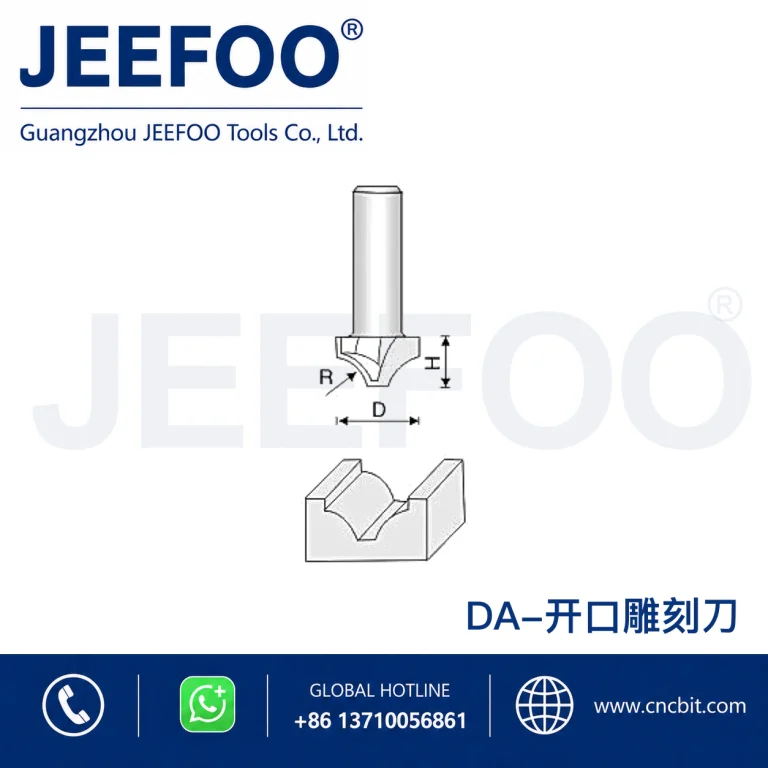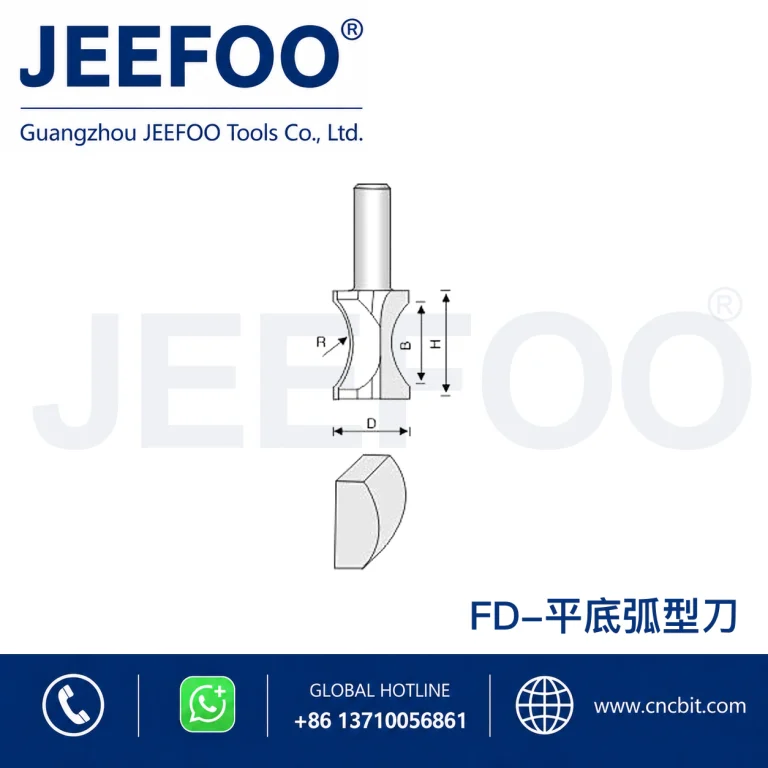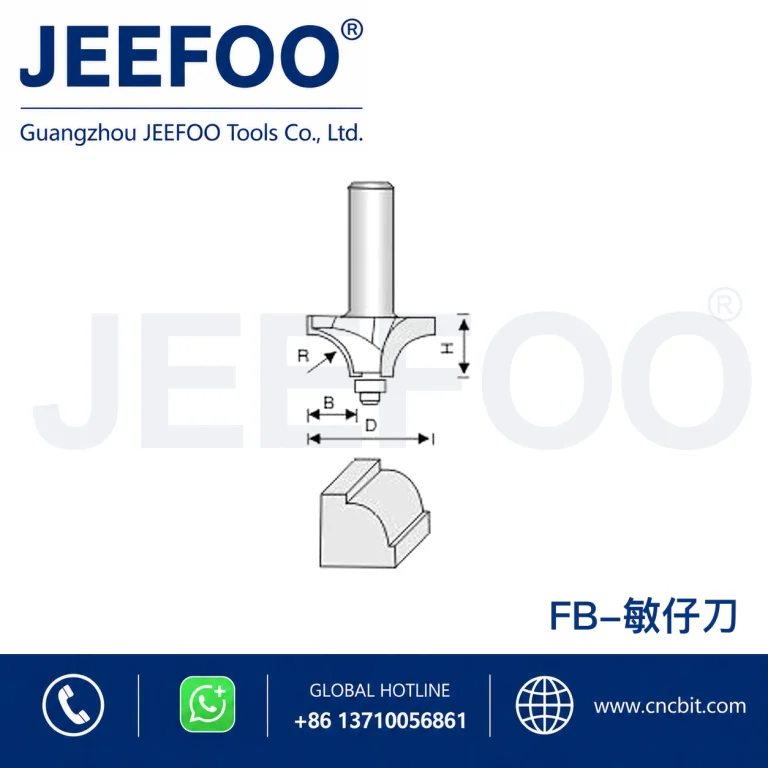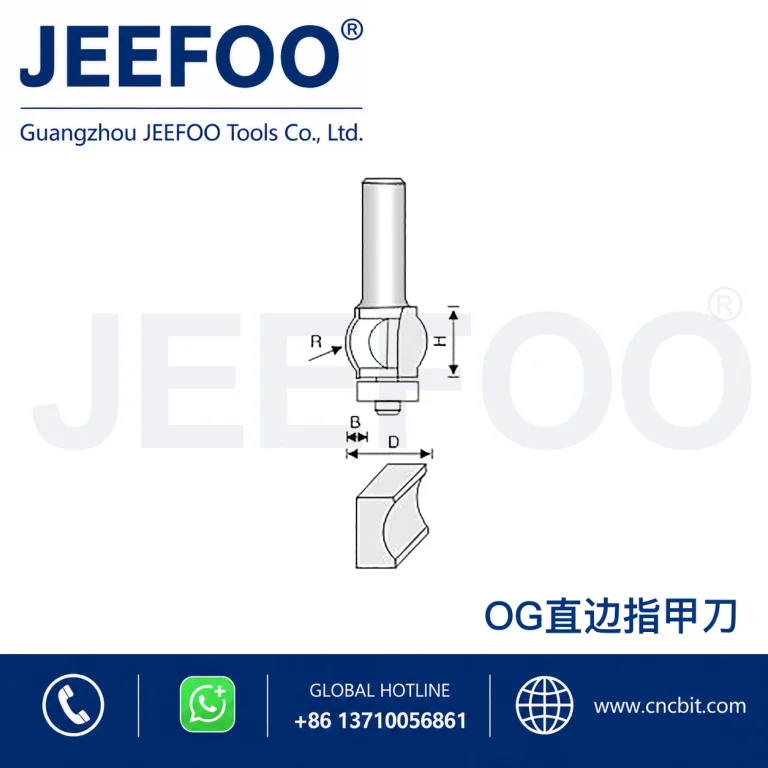
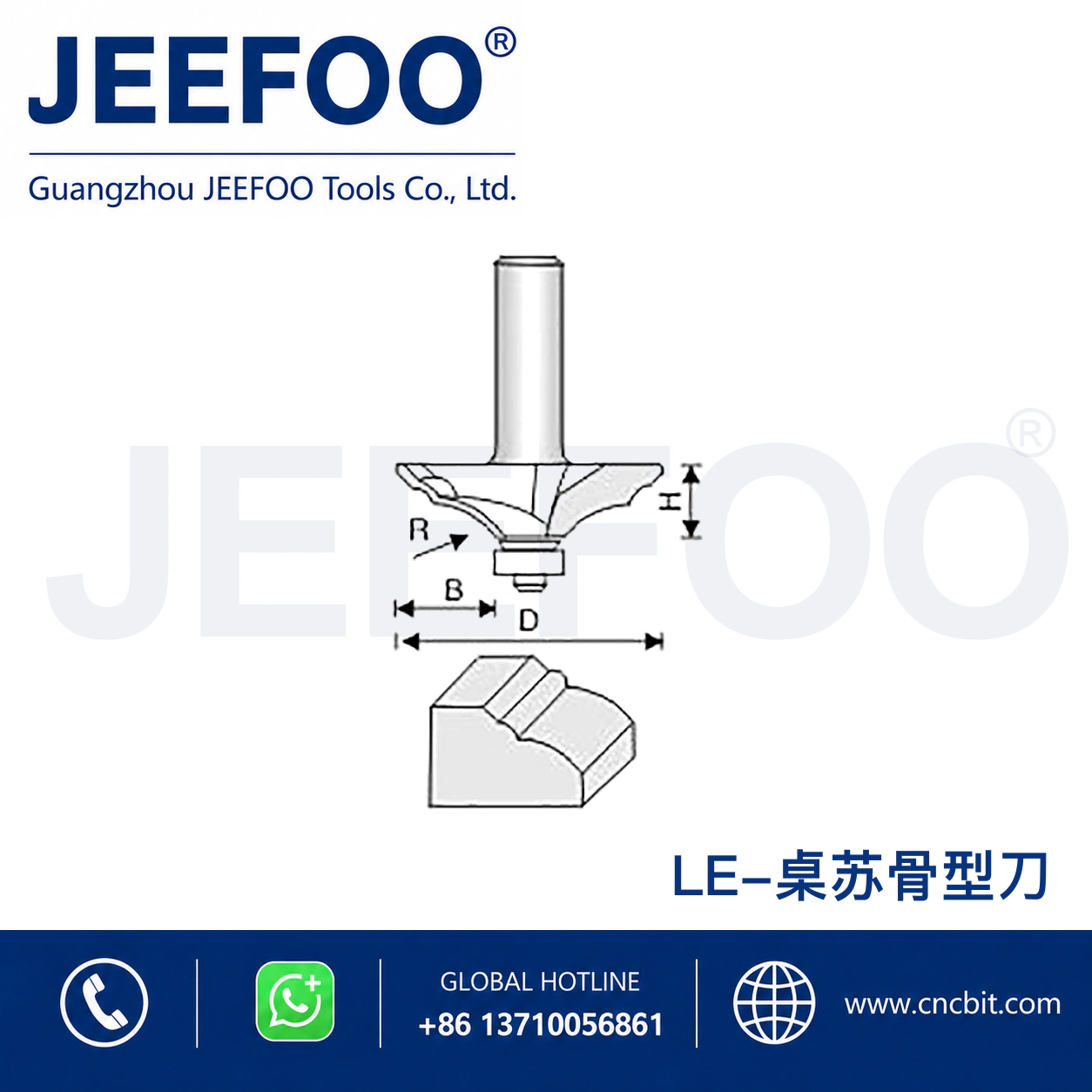
LE Handrail and Table Edge Cutter is a standard woodworking router bit designed for handrail shaping, table-edge profiling and furniture edge decoration. The blue schematic drawing identifies the cutter profile and supports accurate model selection for routing and molding applications.
Handrail and Table Edge Cutter Features
- Profile geometry is designed for handrail shaping, table-edge profiling and furniture edge decoration.
- Precision-machined cutting edges support stable routing and a consistent wood finish.
- Suitable for compatible routers, spindle molders and CNC woodworking equipment.
- Designed for solid wood, MDF, plywood and other compatible wood-based materials.
- Standard models and customized dimensions are available for production requirements.
Applications and Selection Guidance
Use the LE profile for handrail shaping, table-edge profiling and furniture edge decoration. Confirm the shank or bore size, cutting diameter, cutting height, machine rotation and required profile before ordering. Perform a test cut and adjust speed, feed and cutting depth for the material and machine rigidity.
- Keep the tool and holder clean before installation.
- Minimize tool overhang and verify secure clamping.
- Use suitable dust extraction and workpiece holding.
- Do not operate a chipped, cracked or excessively worn cutter.
Product Description
- Series: L-Handrail & Table Edge Cutters.
- Model: LE.
- Product type: Handrail and Table Edge Cutter.
- Application: Handrail shaping, table-edge profiling and furniture edge decoration.
- Customization: Contact us for compatible dimensions and non-standard cutter profiles.
LE Handrail and Table Edge Cutter: CNC Routing Guidance
The LE handrail and table edge cutter is selected for shaping handrails, profiling table edges and adding a controlled furniture-edge detail. It helps a CNC router or spindle molder reproduce a defined profile when the cutter drawing, workpiece dimensions and machine setup are matched. Confirm the complete finished section before ordering and test the profile on sample stock.
How to Choose the LE Profile
- Compare the cutter profile with the handrail or table-edge drawing and finished dimensions.
- Confirm shank or bore size, cutting diameter, cutting height and holder compatibility.
- Check machine clearance, spindle capacity and workholding for the required edge detail.
- Provide the material, quantity and profile drawing when requesting custom dimensions.
LE Handrail and Table Edge Cutter FAQ
Which materials are suitable?
Use the LE profile with compatible solid wood, MDF, plywood and other wood-based materials after confirming cutting data for the exact grade and machine.
How can I improve the edge finish?
Secure the stock, minimize tool overhang, use sharp cutting edges, provide dust extraction and make a shallow trial pass before production routing.
Setup and Production Checklist
Inspect the LE handrail and table edge cutter for chips, burrs and contamination before installation. Run it true in a clean holder with the minimum practical overhang. Start with conservative speed, feed and depth, then measure the trial profile against the drawing. Record the approved cutter, material, spindle setting, pass depth and inspection result so repeated furniture production remains consistent. Stop if vibration, burning, unusual noise or surface tearing appears, and store the cleaned cutter protected from impact and moisture.
- Measure the profile using the same datum points as the customer drawing.
- Keep replacement cutters identified by model, profile, diameter and shank.
- Use stable workholding and suitable dust extraction for every pass.
- Contact the manufacturer with machine details for a compatible custom solution.
For related CNC cutting-tool information, visit JEEFOO CNC router bit resources. Review recognized woodworking safety guidance from OSHA woodworking safety before operating routing equipment.
For a custom LE handrail and table edge cutter, send the profile drawing, stock dimensions, machine model, available power, spindle or arbor details and target quantity. Clear specifications help the manufacturer confirm the cutting envelope, working height, clamping method and expected finish. A sample or approved reference section is useful when the edge includes several coordinated decorative stages.