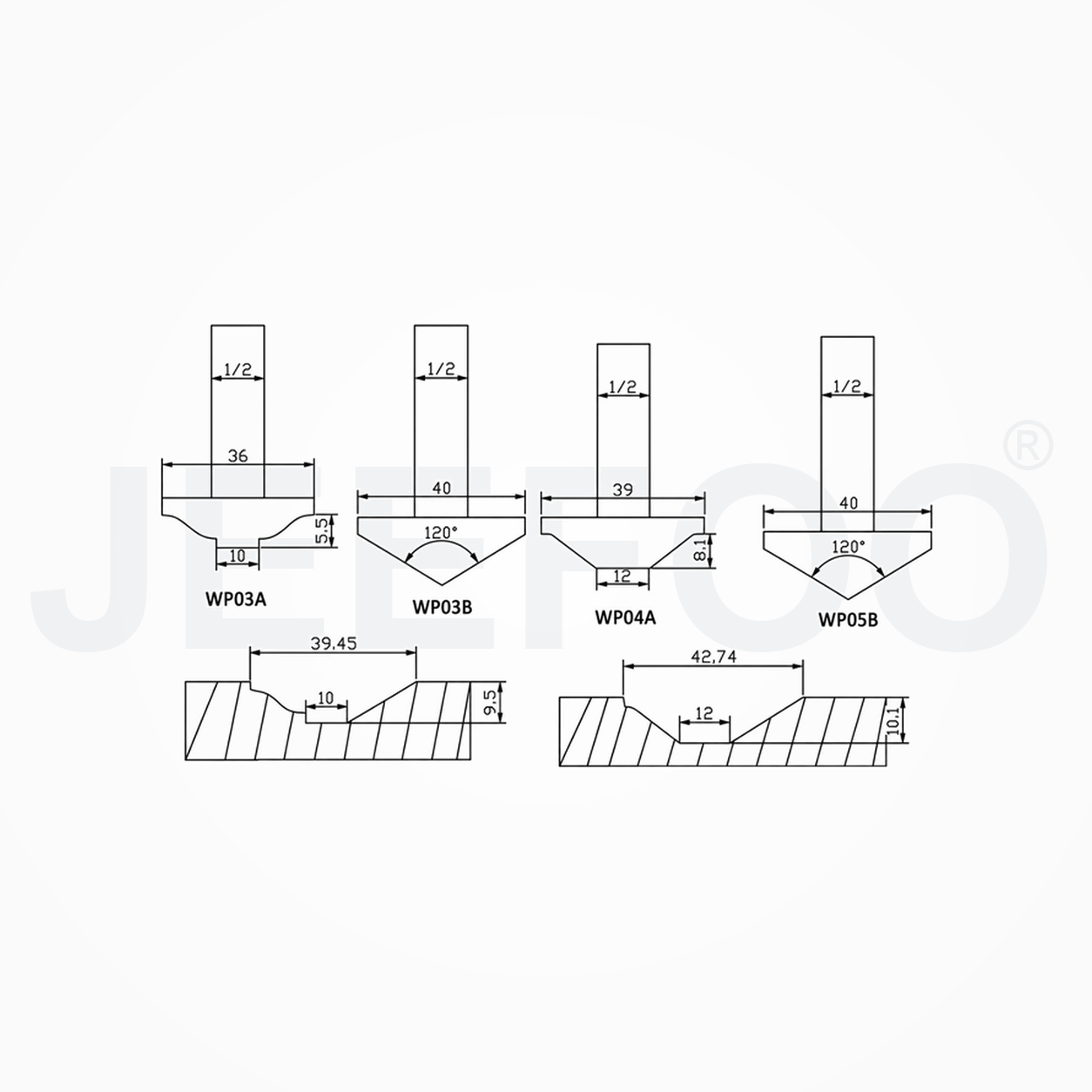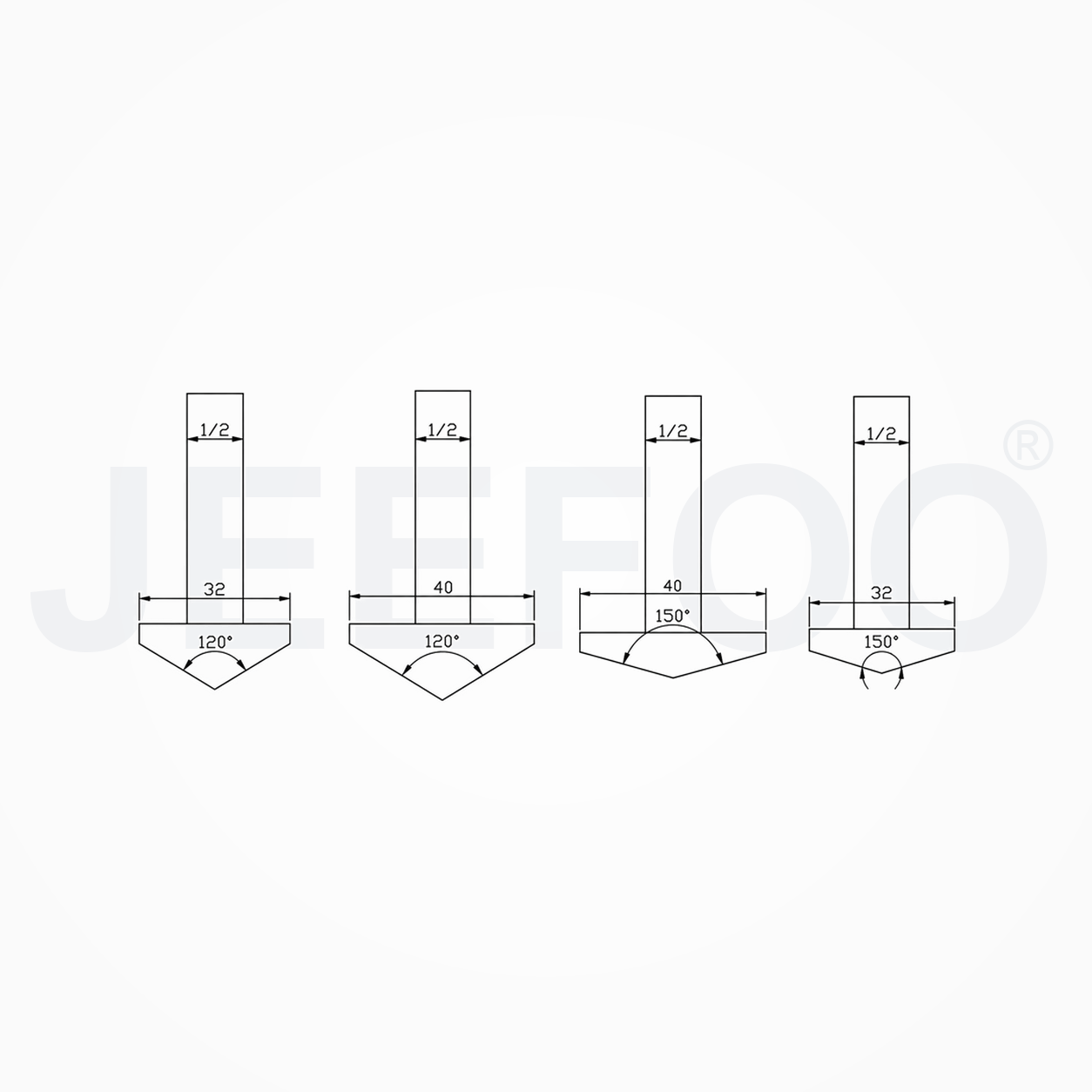
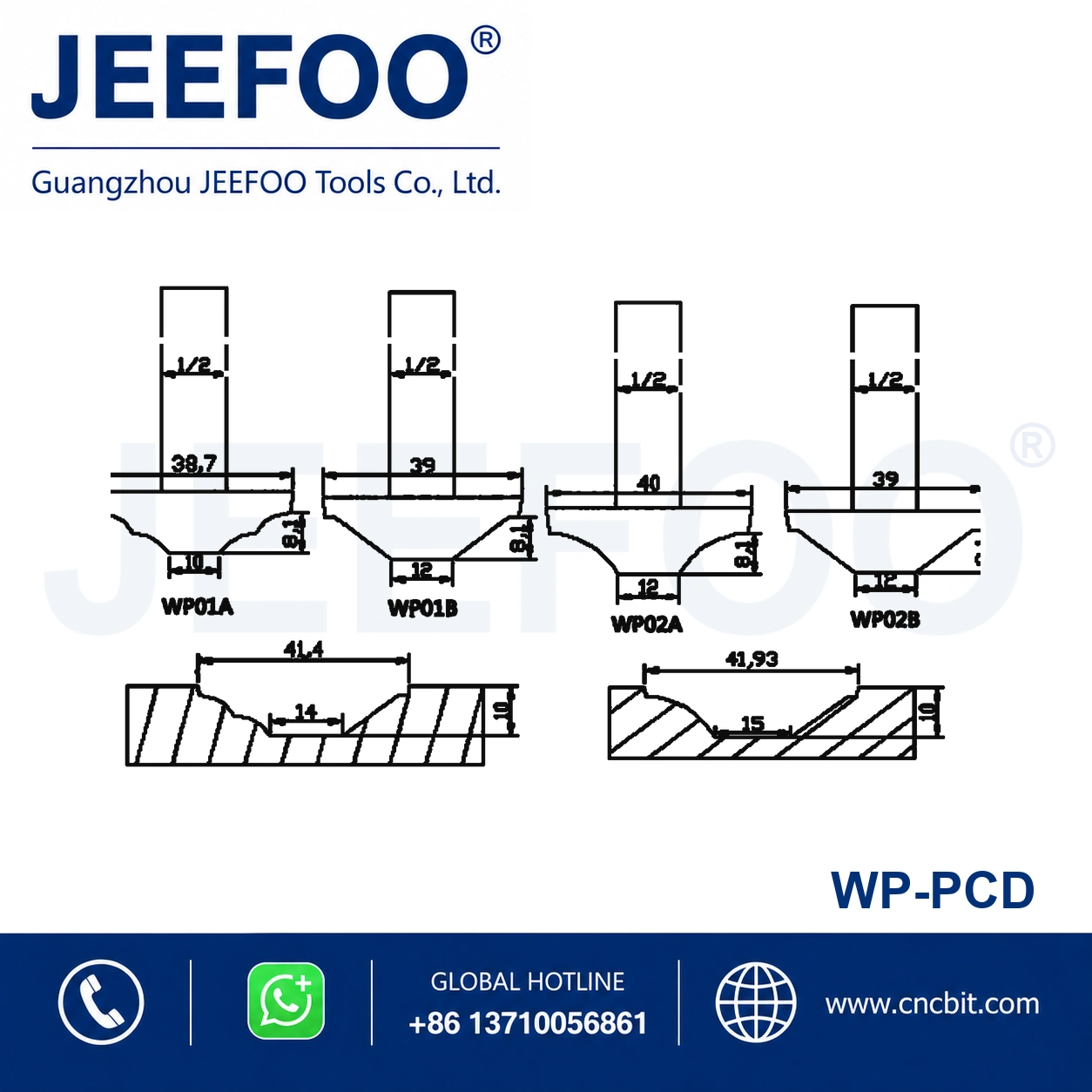
The PCD cabinet door panel cutter is engineered for coordinated profile forming and decorative machining in cabinet and furniture production. Its combination-tool design helps manufacturers create compatible door-panel profiles with repeatable geometry, while polycrystalline diamond cutting edges provide strong wear resistance on abrasive engineered wood products. JEEFOO supplies CNC cutting tools from Guangzhou, Guangdong, China for professional workshops, distributors, and production lines.
PCD Cabinet Door Panel Cutter Features
- PCD cutting edges for long service life on abrasive panel materials
- Combination design for coordinated cabinet-door profile machining
- Stable cutting geometry for repeatable CNC woodworking production
- Suitable for compatible MDF, particle board, plywood, and laminates
- Supports efficient forming when spindle, feed, and sequence are correct
Why Choose a Combination Cutter?
A combination tool can coordinate multiple cutting profiles within a planned cabinet-door system. This may reduce tool changes and simplify repeat production, but dimensions must match the required panel design and machine setup. Before ordering a PCD cabinet door panel cutter, confirm the tool diameter, bore or shank connection, cutting height, profile drawing, rotation direction, and spindle limits.
Suitable Cabinet and Furniture Materials
The PCD cabinet door panel cutter is intended for compatible MDF, particle board, plywood, laminated panels, and similar engineered wood products. PCD is especially valuable when abrasive fibers, adhesives, or surface layers cause rapid wear on conventional edges. The correct application still depends on material composition, coating, density, tool engagement, dust extraction, and machine rigidity.
Do not assume one setting suits every board. A dense MDF panel and a lightweight particle board can require different feed rates and cutting strategies. Laminated faces also need careful entry and exit control to reduce chipping. Always test on scrap material from the production batch before machining finished components.
How to Set Up the CNC Combination Cutter
- Review the approved profile drawing and confirm tool compatibility.
- Inspect the PCD edges, tool body, connection, and machine spindle.
- Clean all locating surfaces and install the tool using the specified method.
- Verify rotation direction, clearance, guarding, and dust extraction.
- Enter conservative spindle and feed settings for the first test.
- Machine a sample panel and measure every critical profile dimension.
- Adjust one parameter at a time before authorizing full production.
Spindle Speed, Feed Rate, and Cutting Sequence
Use settings that keep the PCD cabinet door panel cutter within the machine and tool manufacturer’s limits. Feed that is too slow can increase heat and edge rubbing, while excessive feed can overload the edge and spindle. Coordinate the cutting sequence so material remains supported throughout machining. Stable workholding, balanced stock allowance, and effective chip removal improve surface quality and dimensional accuracy.
Production Testing and Quality Control
Inspect the first component, samples from the middle of the batch, and the final panel. Measure profile depth, width, alignment, and joint fit with appropriate gauges. Check visible surfaces for chipping, burning, ridges, and inconsistent transitions. Record the panel supplier, batch, tool identification, spindle speed, feed rate, pass strategy, and production quantity. This quality-control routine helps operators detect drift early, reduce scrap, and separate tool wear from problems caused by material variation, workholding, spindle condition, or dust buildup.
PCD Tool Maintenance and Safe Handling
Clean the tool using a suitable non-abrasive process and inspect it under good lighting. Never scrape the cutting edges with hard metal objects. The PCD cabinet door panel cutter should be removed from service if an edge is chipped, the tool body is damaged, or vibration appears unexpectedly. PCD edges require specialist inspection and servicing; avoid unapproved grinding or repair. Store the tool in protective packaging so edges cannot contact other tools.
Supplier in Guangzhou, Guangdong
JEEFOO supports customers in Guangzhou, Guangdong and international markets with tool selection, drawing review, and application guidance. Explore our CNC cutting tools and product range for additional woodworking solutions. For a quotation, provide the profile drawing, panel material, machine model, spindle connection, rotation direction, required dimensions, and expected production volume.
Frequently Asked Questions
What does PCD mean in a cabinet door cutter?
PCD means polycrystalline diamond, a cutting-edge material known for wear resistance when machining many abrasive non-metallic products.
Can one cutter process every cabinet door profile?
No. Combination geometry must match the specific door design, panel thickness, machine, and cutting sequence. Confirm drawings and dimensions before production.
When should a PCD cabinet door panel cutter be serviced?
Arrange specialist inspection when surface quality declines after normal setup checks, dimensions drift, vibration increases, or an edge appears damaged. Do not continue using a chipped tool.