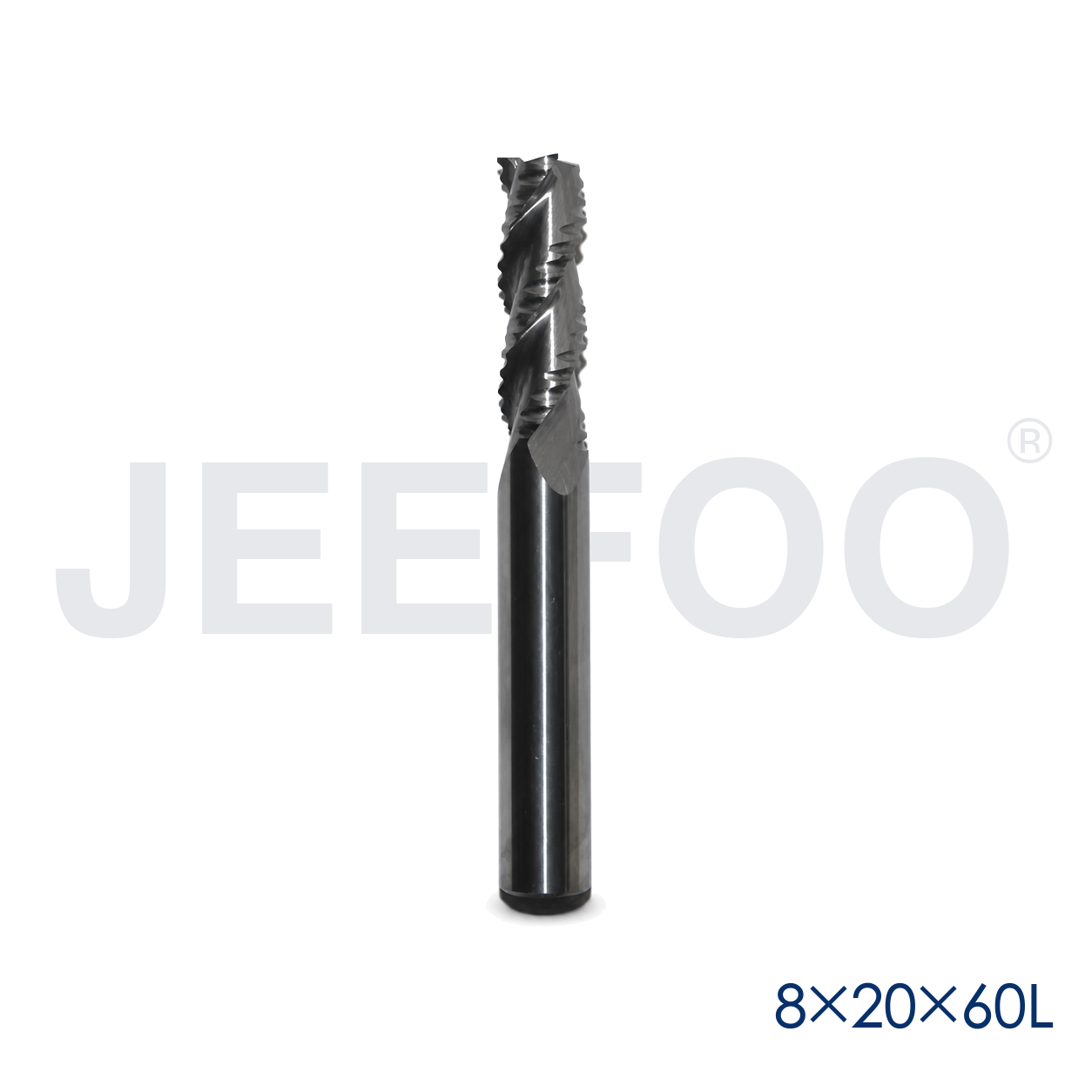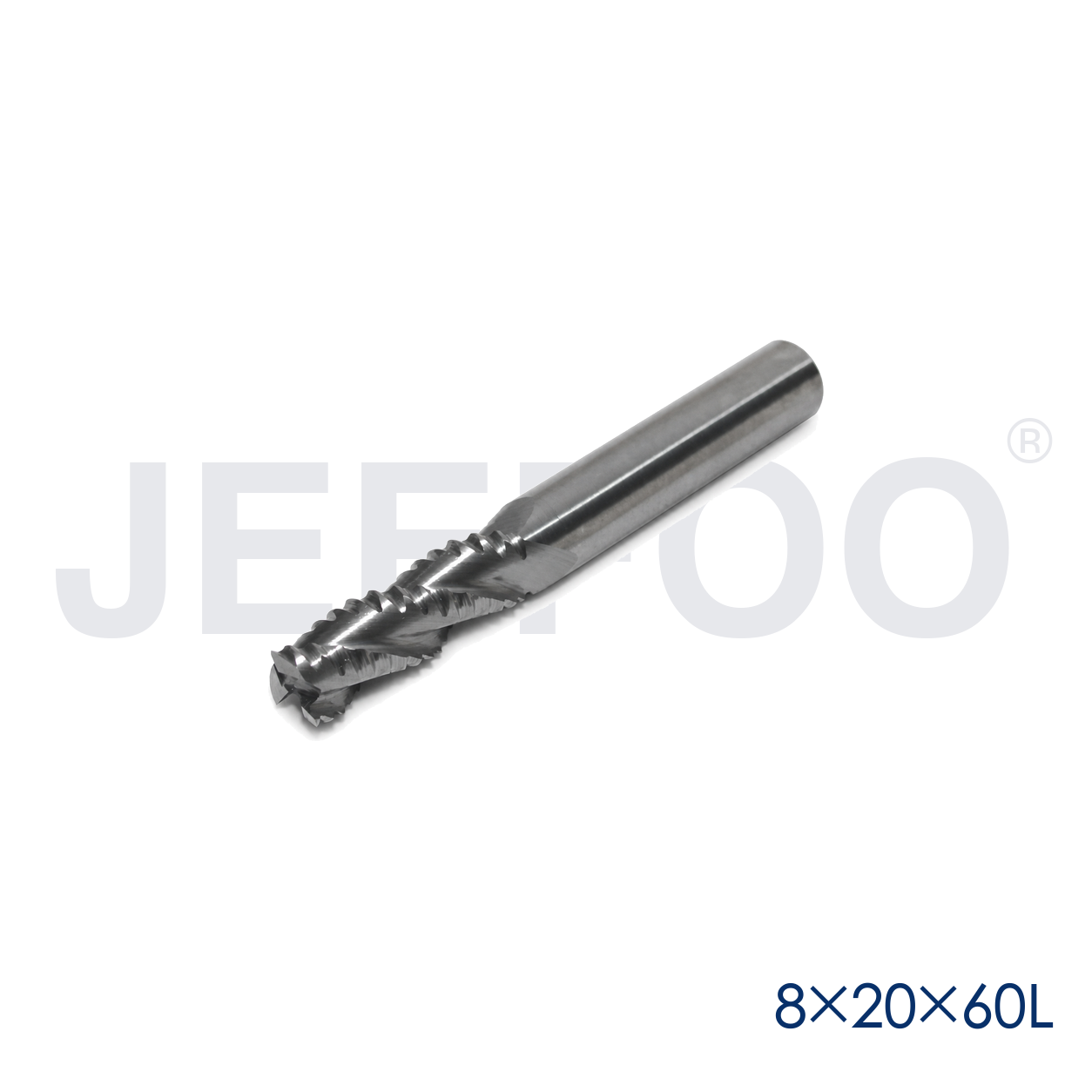
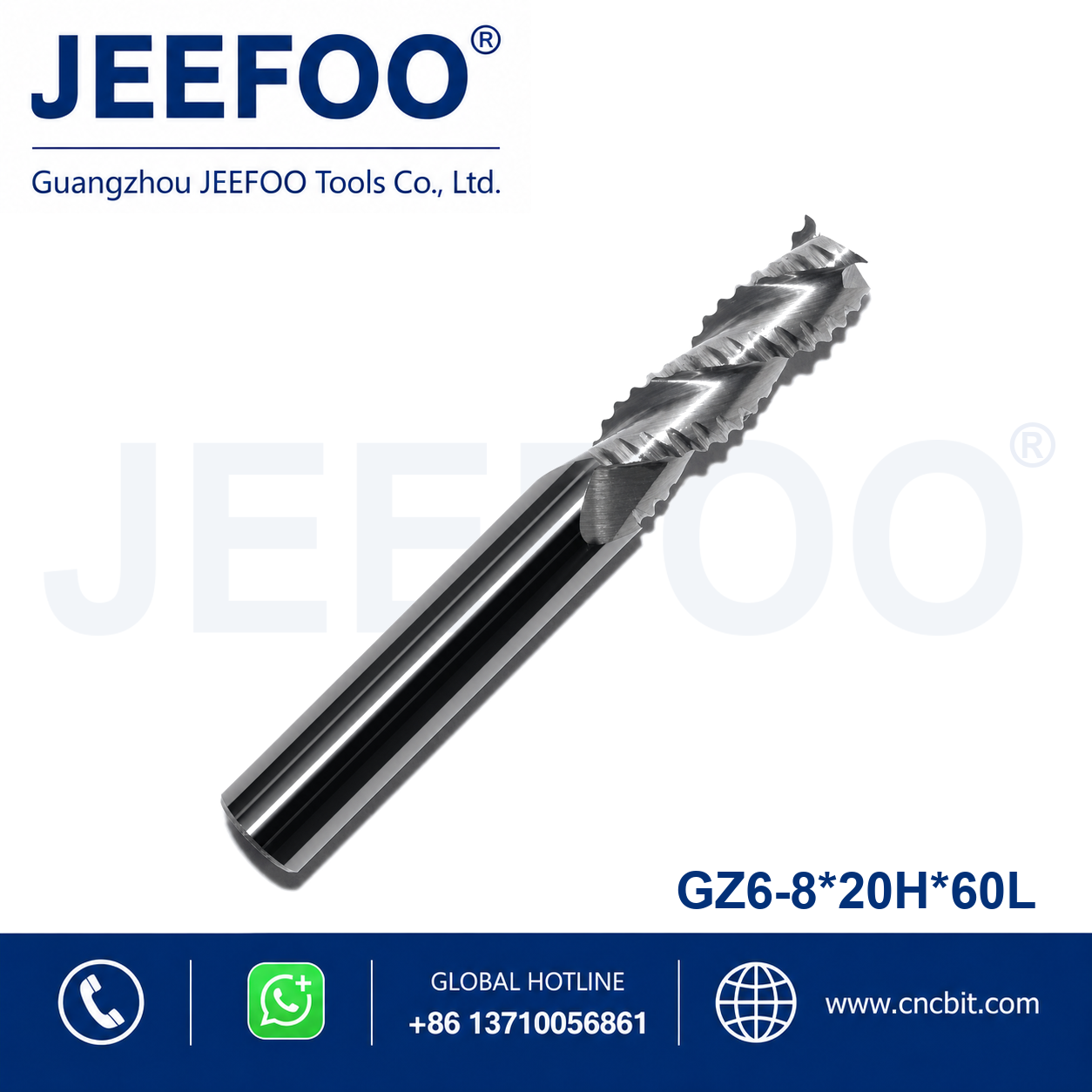
8x20x60L Roughing End Mill Applications
Use this roughing cutter for controlled material removal in compatible carbon steel, alloy steel, cast iron, stainless steel and non-ferrous workpieces after confirming the correct coating, coolant method and operating range. Typical work includes cavity preparation, side milling, step milling, open-slot roughing and pre-finishing on CNC machining centers and suitable milling machines.
The 8x20x60L Roughing End Mill is intended to leave a small, consistent finishing allowance rather than produce the final surface in one operation. A separate finishing end mill can then remove the remaining stock and achieve the required dimensional tolerance and surface quality.
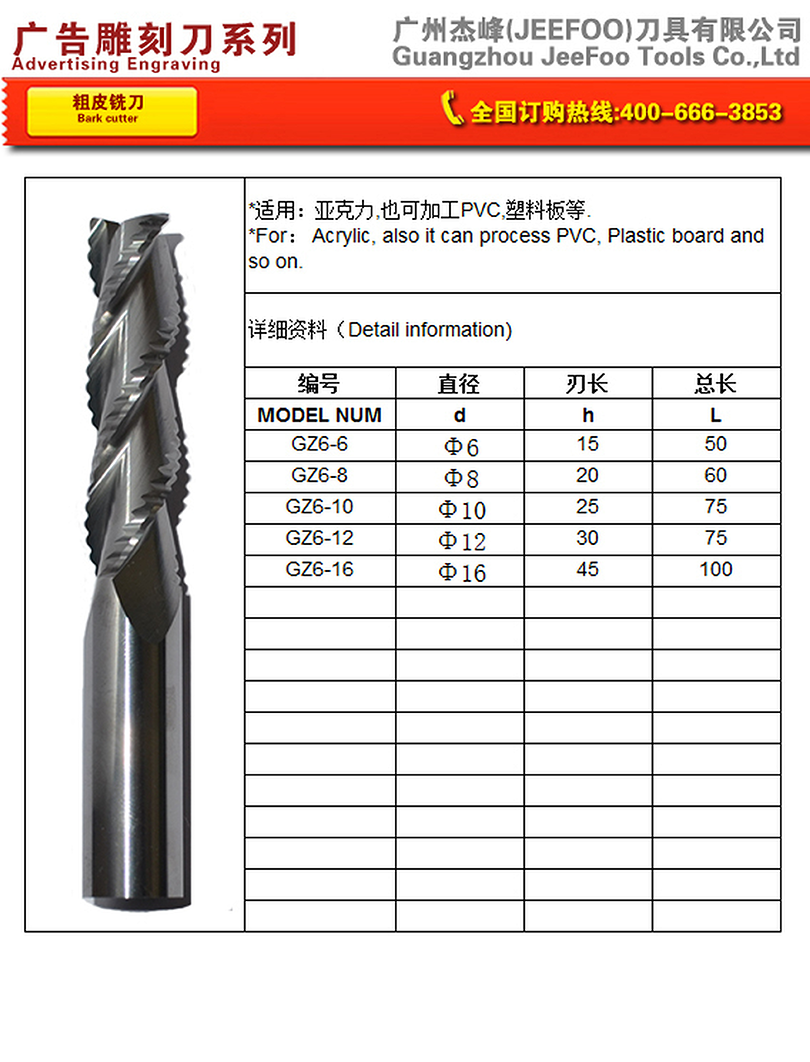
Dimensions and Tool Selection
- Cutting diameter: 8 mm
- Cutting length: 20 mm
- Overall length: 60 mm
- Tool type: carbide roughing end mill
- Primary purpose: high-efficiency metal stock removal
Confirm the shank diameter, flute count, helix, corner geometry and coating before ordering. The correct specification depends on the workpiece material, spindle interface, holder, machine power, radial engagement and required depth. Keep tool overhang as short as practical to improve rigidity and reduce vibration.
CNC Setup and Test-Cut Procedure
- Clean the holder, collet and shank before clamping.
- Check spindle runout and verify that the workpiece is securely fixed.
- Use a conservative starting feed, speed and depth based on the material.
- Make a short test cut and inspect chip shape, sound, spindle load and edge condition.
- Provide suitable coolant, air blast or chip evacuation for the application.
- Adjust one parameter at a time and record the stable cutting condition.
In milling cutter applications, feed per tooth must be high enough to cut rather than rub, while chip evacuation must prevent recutting. Excessive overhang, worn holders or unstable fixtures can cause chatter and premature edge damage even when the programmed speed appears reasonable.
Roughing Performance and Tool Life
Roughing teeth break the chip and can lower cutting force compared with a smooth-edge finishing tool under suitable conditions. They do not eliminate the need for correct engagement. Use step-down and width-of-cut values that the machine, holder and tool can support. For deep cavities, clear chips between levels and avoid trapping hot material around the cutter.
Inspect the cutting edges for chipping, built-up material, coating wear and uneven loading. Replace the tool if damage affects spindle load, size or process stability. Do not compensate for a worn cutter by increasing spindle speed, because added heat may shorten tool life further.
JEEFOO Supply from Guangzhou, China
JEEFOO manufactures and supplies CNC cutting tools from Guangzhou, China, for distributors, workshops and industrial users. Dimensional checks and cutting-edge inspection support consistent batch supply. Browse related products on the JEEFOO CNC cutting tool website, or send the drawing, work material, machine type, holder, quantity and target application for specification confirmation.
Safe Operation and Inspection
Confirm that the cutter is compatible with the spindle and holder. Never clamp on the flutes. Stop the machine completely before tool changes, keep guards and chip control equipment in operation, and wear suitable eye protection. After a collision or abnormal vibration, remove and inspect the tool before restarting the process.
8x20x60L Roughing End Mill FAQ
What is the main purpose of a roughing end mill?
It removes stock efficiently and prepares the workpiece for a separate finishing pass. Serrated cutting edges divide the chip and can reduce cutting resistance in a stable setup.
Can this cutter make the final finishing pass?
A roughing cutter normally leaves a patterned surface and a small allowance. Use an appropriate finishing end mill when the drawing requires a smoother surface or tighter tolerance.
What information should be provided for tool confirmation?
Provide the 8 mm diameter, 20 mm cutting length, 60 mm overall length, required shank, workpiece material, machine, holder, coolant method, application and order quantity.