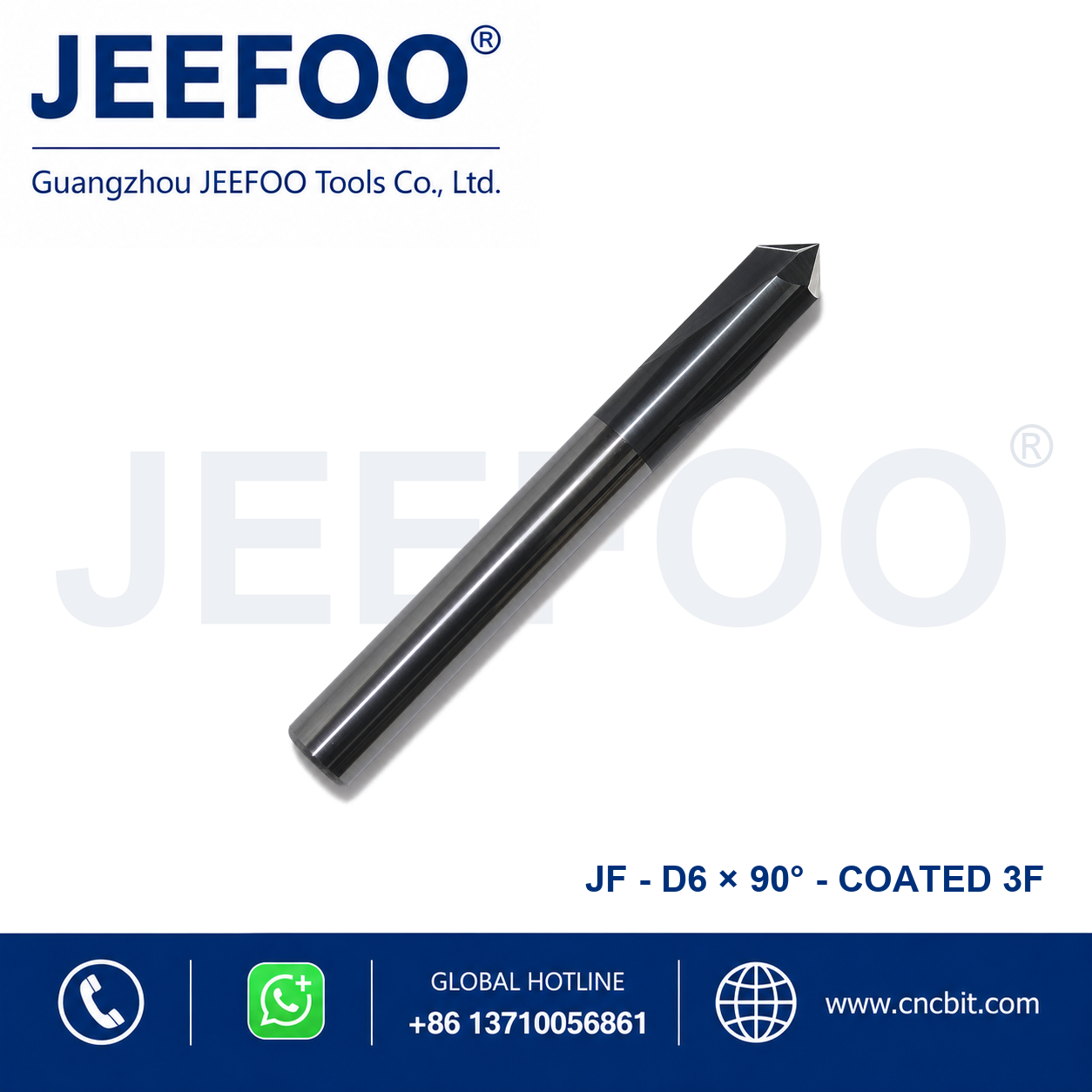
6×90 Three Flute Chamfer End Mill Guide
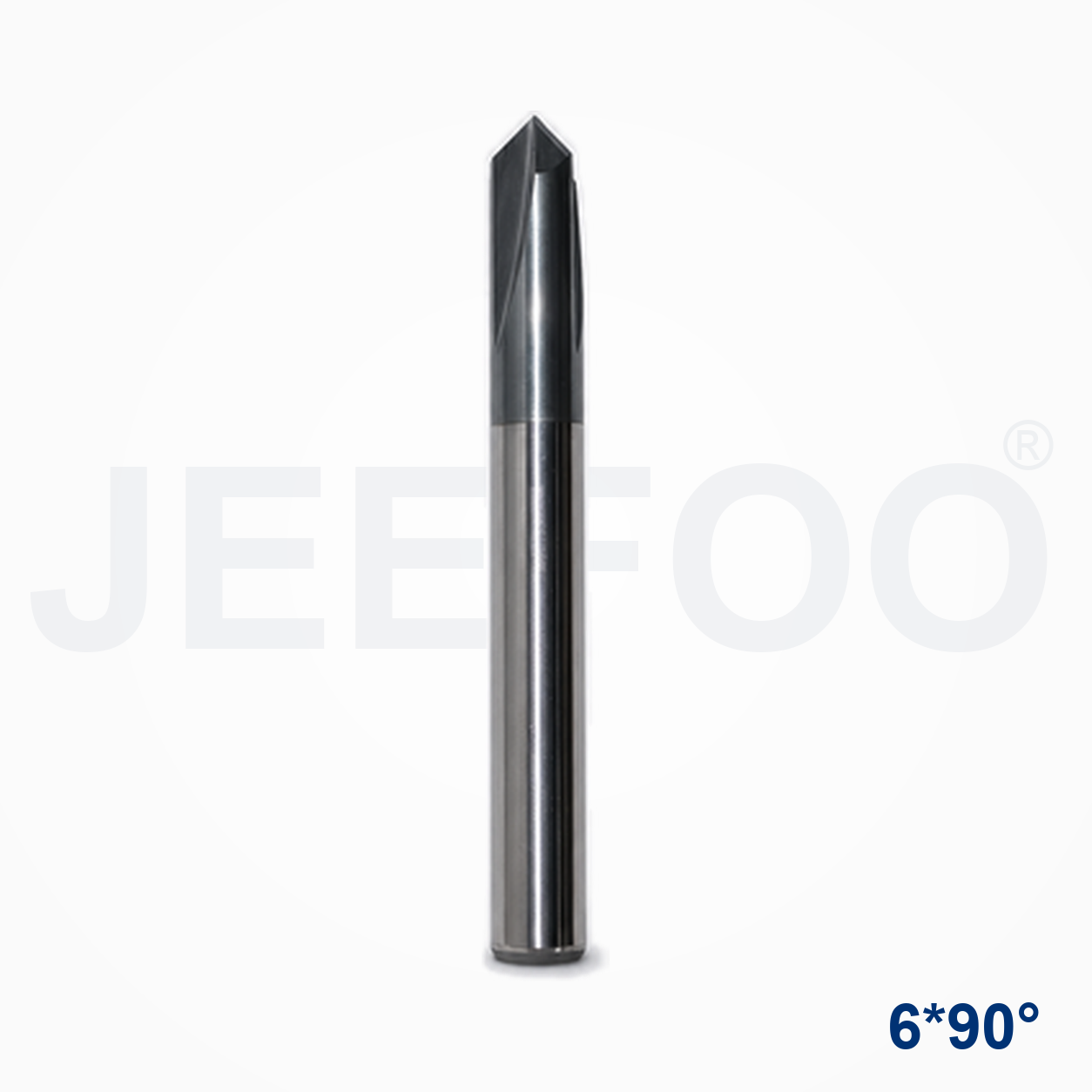
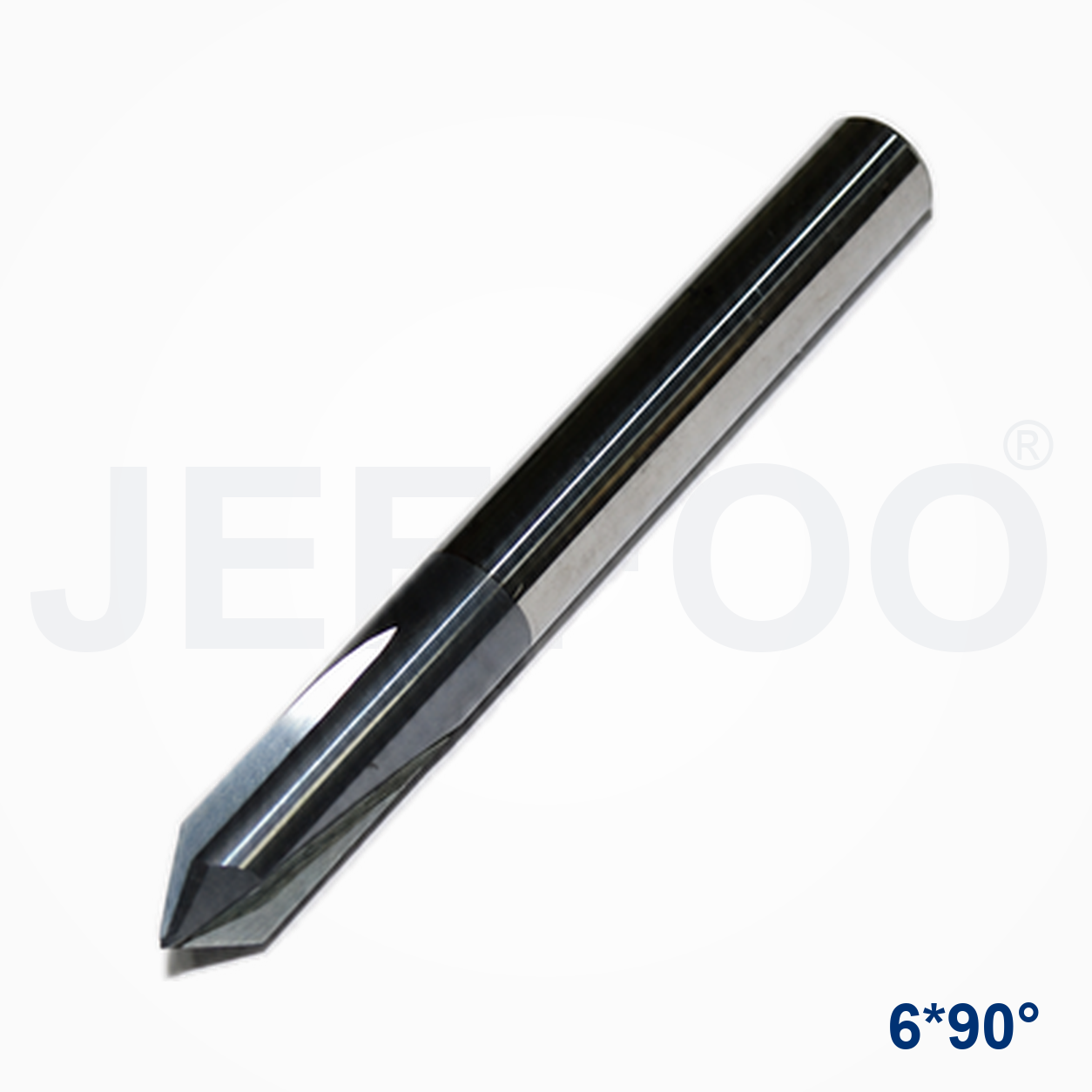
A 6×90 three flute chamfer end mill uses a 6 mm shank and 90-degree included angle for V-grooves, edge chamfers, countersinking-style features and decorative CNC details. Three cutting edges can provide stable contact and a consistent finish when feed per tooth, spindle speed and chip removal match the material.
Applications and Material Use
The coated carbide cutter can be considered for acrylic, compatible plastics and selected non-ferrous work when the coating, cutter geometry and process are approved for the material. It is suitable for precise 90-degree features rather than general deep pocket milling.
- 90-degree V-grooves and decorative lines
- Edge chamfers and deburring passes
- Sign lettering and panel details
- Selected countersinking-style features within tool limits
Understanding the 6×90 Specification
The 6 mm value identifies the shank, while 90 degrees identifies the included cutting angle. Groove width changes with programmed depth, tip geometry and runout. Confirm the complete product drawing, tip condition, overall length and usable cutting diameter before creating the toolpath.
For an accurate V-groove, calculate the required depth from the target top width, then verify the result with a test cut. Material flatness and Z-axis zero accuracy are especially important on large panels.
CNC Setup and Three-Flute Cutting
Clean the collet, verify low spindle runout and clamp enough of the shank for stable rotation. Secure and level the workpiece. Start with a conservative depth and feed, then inspect groove width, edge quality, chips, cutting sound and spindle load.
Three flutes require a suitable feed per tooth. Feeding too slowly can cause rubbing and heat, while excessive engagement can overload the tip or produce chatter. Use appropriate extraction, air flow or lubrication for the material and machine. Avoid dwelling at the bottom of a V-groove.
JEEFOO Chamfer Tools from Guangzhou, China
JEEFOO supplies carbide chamfer and engraving cutters from Guangzhou, China for distributors, manufacturers and workshop users. Share the material, desired groove width, depth, machine type and finish requirement when requesting a 6×90 three flute chamfer end mill. Explore more products on the JEEFOO cutting tools website.
For general CNC background, see the reference on numerical control. Record the verified tool length, Z zero, feed, speed and cutting depth with the CNC program for consistent repeat production.
Production Checks
Make a short test groove in the actual material before full production. Measure the top width and depth, inspect both edges and verify that chips leave the cutting area. For repeat work, store an approved sample and parameter record with the program. Replace a damaged or dull cutter instead of compensating with unsafe feed or speed changes.
Frequently Asked Questions
What does the 90-degree value mean?
It is the included cutting angle. The finished groove width depends on cutting depth, tip geometry and machine accuracy.
Why use three flutes?
Three edges can provide stable cutting and a consistent finish when feed per tooth and chip evacuation are correctly matched.
How can chamfer consistency be improved?
Level the workpiece, use low runout, set an accurate Z zero and validate depth with a test cut. Inspect the 6×90 three flute chamfer end mill before each batch.
Product Description
This coated three flute chamfer end mill is designed for acrylic, plastic panels, non-ferrous work and precision 90-degree V-grooves. Size: 6×90°.
The solid carbide body provides rigidity for accurate CNC machining, while the cutting-edge geometry supports smooth chip removal and a clean, controlled finish. Match the shank, cutting depth, material thickness and angle to the application. Use secure workholding, low runout, suitable spindle speed and conservative feed settings during initial testing.