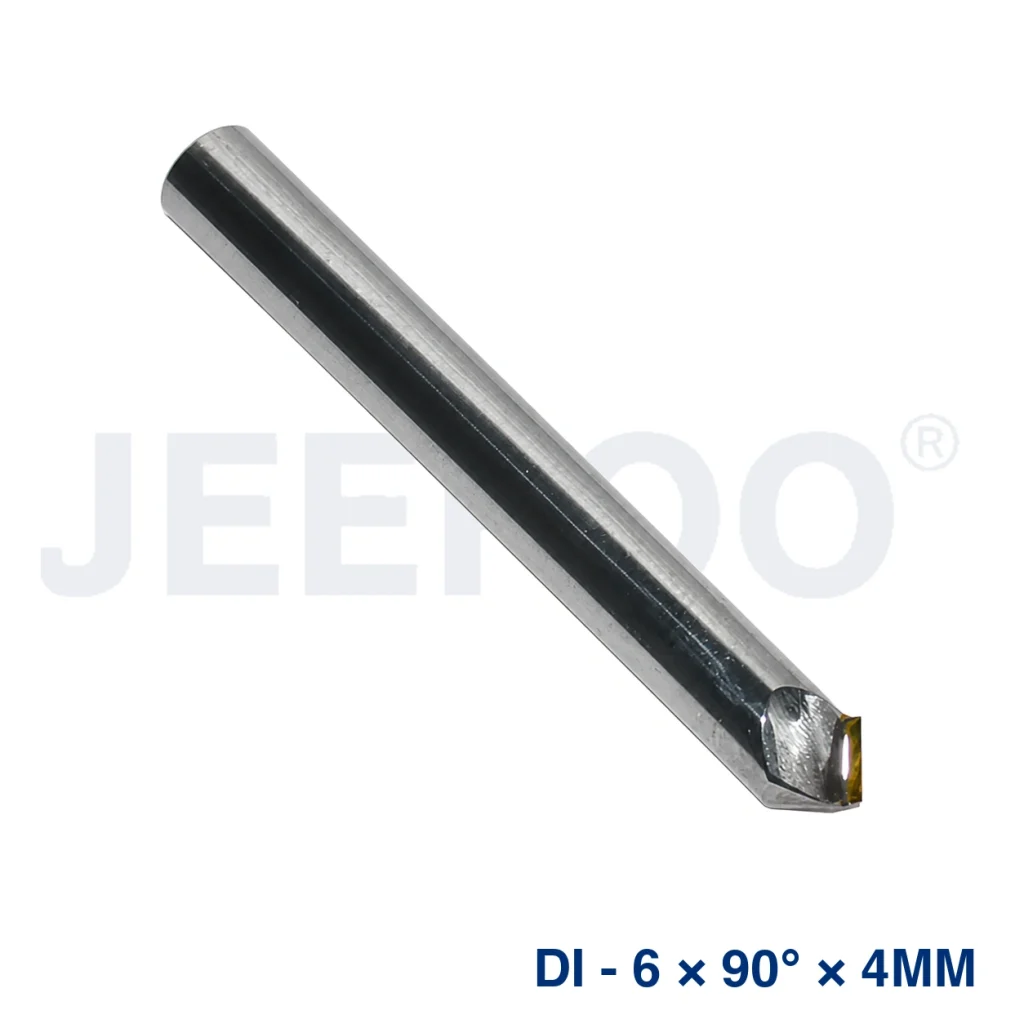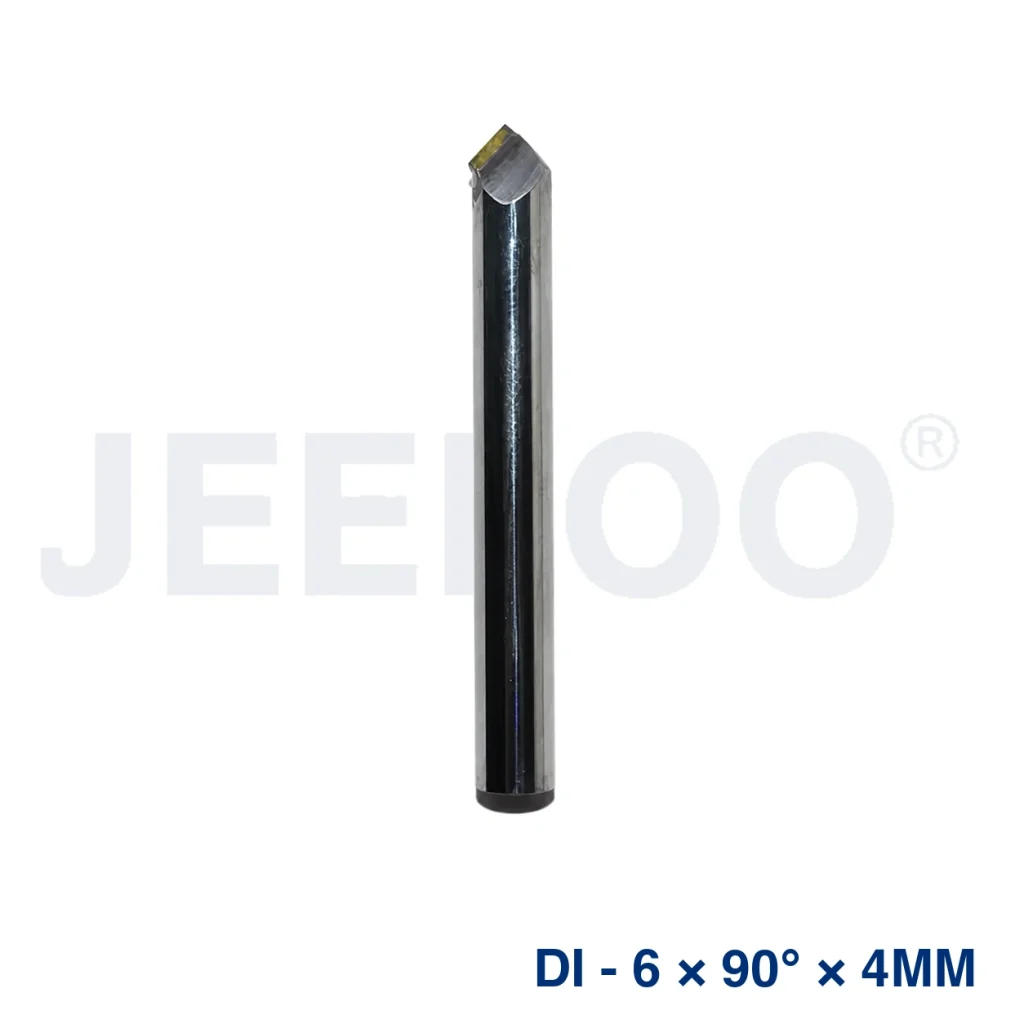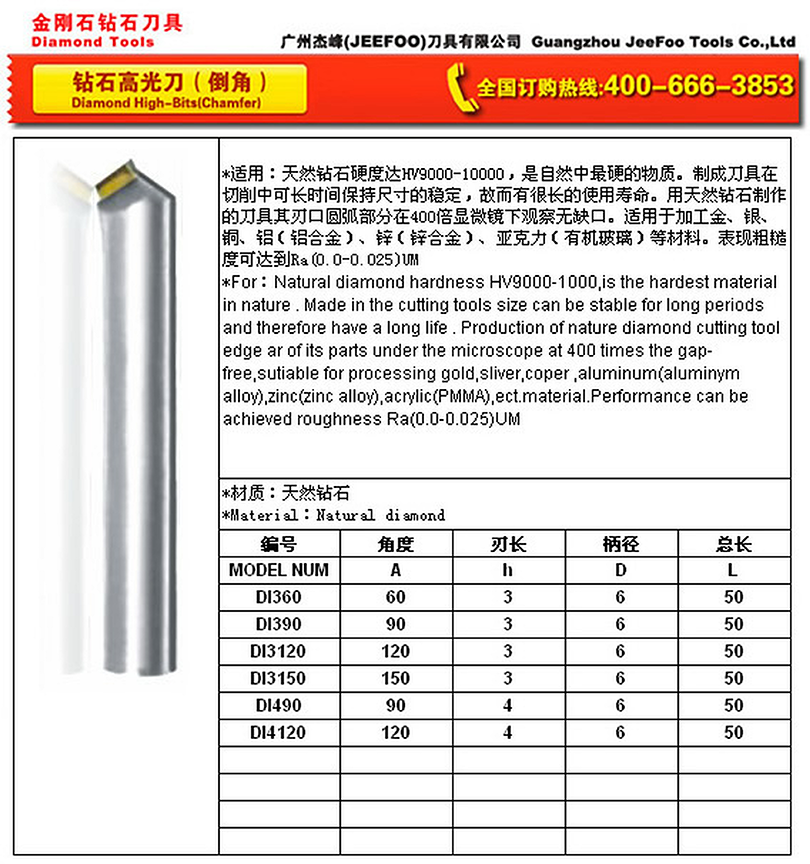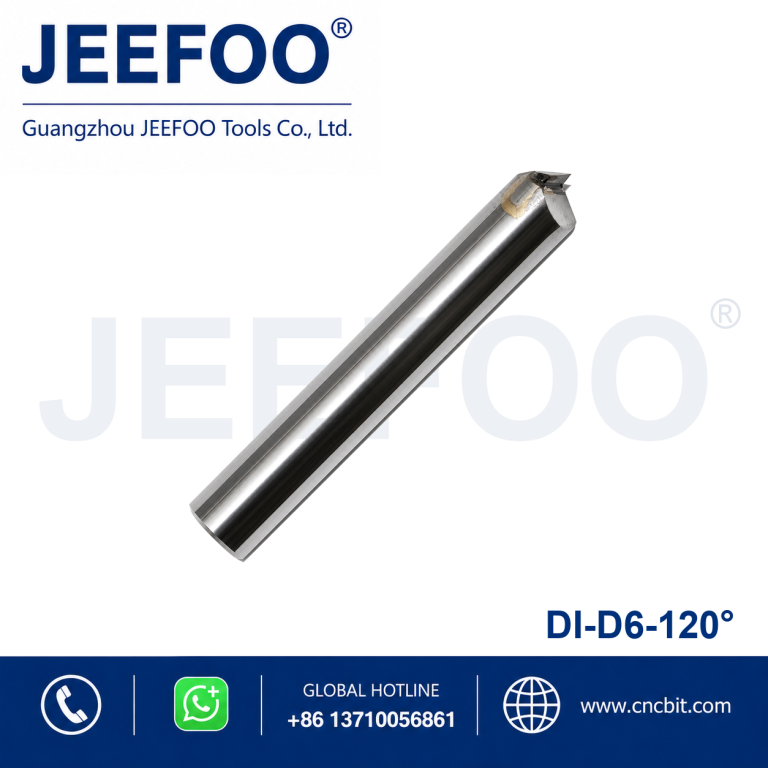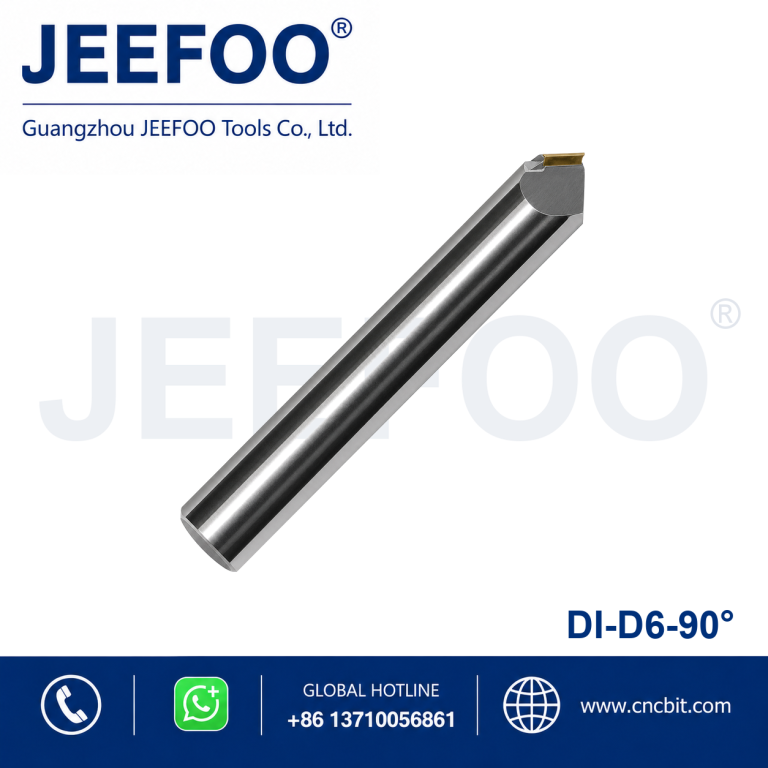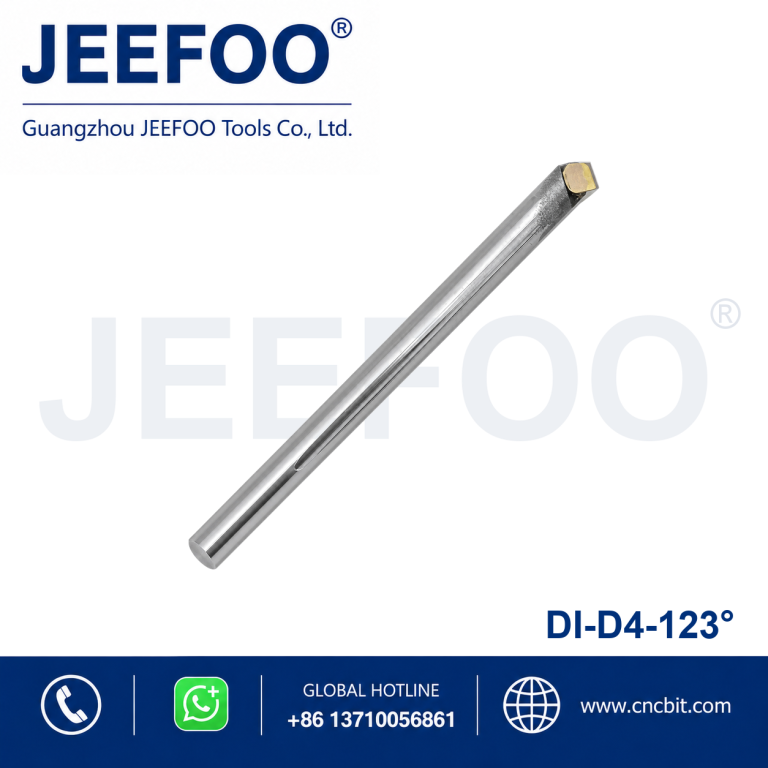
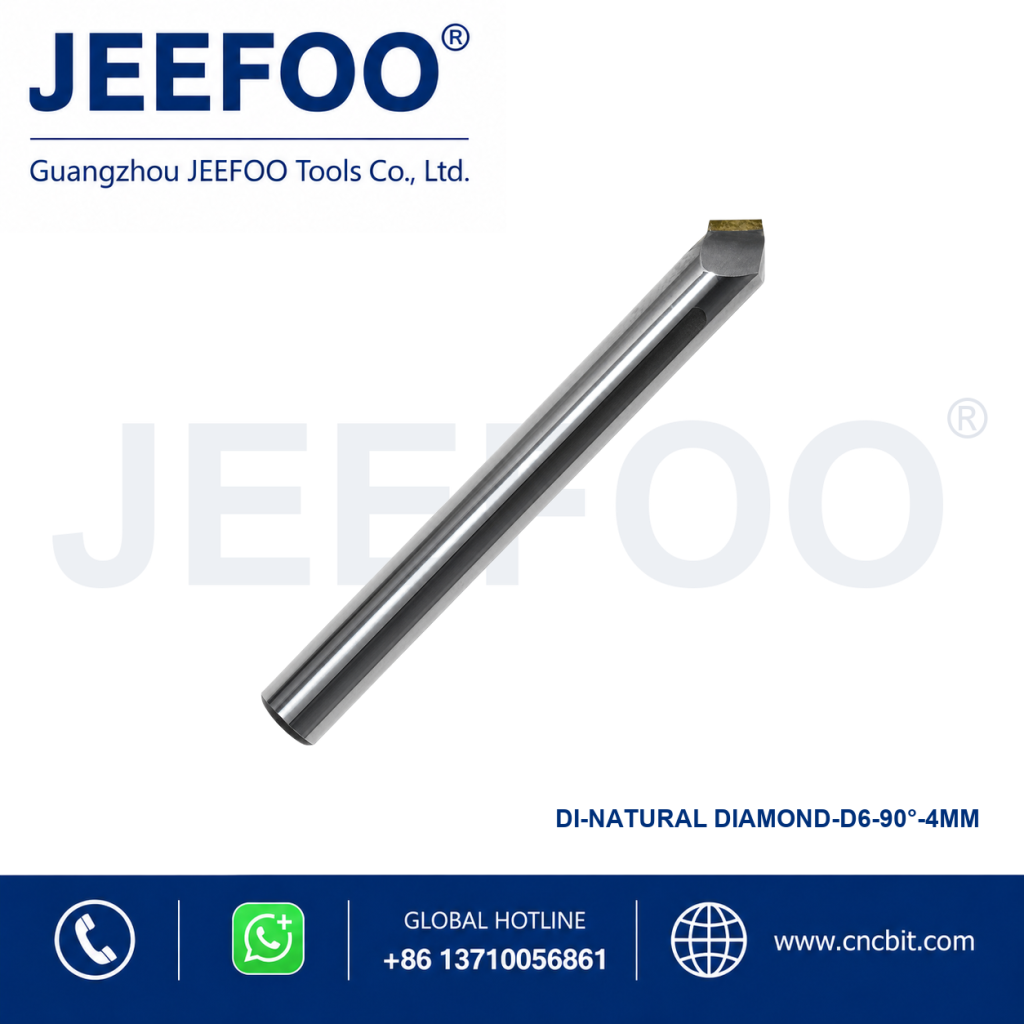
The 6×90 4mm natural diamond chamfer bit is designed for precision 90-degree chamfering and high-gloss edge finishing on compatible non-ferrous metals and plastics. Its natural diamond cutting edge supports sharp geometry, low-friction machining, and a smooth reflective surface when machine conditions are stable. JEEFOO supplies diamond cutting tools from Guangzhou, Guangdong, China for professional CNC users, manufacturers, and distributors.
6×90 4mm Natural Diamond Chamfer Bit Features
- Natural diamond cutting edge for fine finishing applications
- 6 mm shank with a 90-degree included chamfer angle
- Designed for precise edge preparation and high-gloss surfaces
- Suitable for compatible CNC engraving and routing equipment
- Stable geometry for repeatable chamfer width and appearance
Understanding the 6 mm Shank and 90-Degree Angle
The 6 mm shank must match the machine collet and toolholding system. A 90-degree included angle is used for a broader chamfer profile and must match the specified part geometry. Before ordering a 6×90 4mm natural diamond chamfer bit, confirm shank tolerance, cutting-edge length, overall length, rotation direction, spindle limits, and the required chamfer width.
Materials and High-Gloss Applications
The 6×90 4mm natural diamond chamfer bit may be used on compatible gold, silver, copper, aluminum and aluminum alloys, zinc alloys, acrylic, and other approved non-ferrous or plastic materials. Natural diamond tools are not a universal choice for every workpiece. Material hardness, alloy composition, coating, coolant strategy, machine rigidity, and required finish must all be evaluated.
Typical applications include decorative edge finishing, nameplates, metal panels, acrylic components, jewelry-related work, and precision chamfers where a clean reflective result is important. Always test on sample material from the production batch. The final appearance depends on tool condition, runout, feed, speed, depth, chip control, and the quality of the surface prepared before the finishing pass.
How to Set Up the Diamond Chamfer Bit
- Review the drawing and confirm the specified 90-degree geometry.
- Inspect the natural diamond edge under good lighting.
- Clean the 6 mm shank, collet, and spindle locating surfaces.
- Install the tool securely using the machine manufacturer’s method.
- Verify clearance, rotation direction, guarding, and workholding.
- Begin with conservative speed, feed, and cutting depth.
- Machine a test piece and measure the chamfer before production.
Runout, Feed Rate, and Finishing Depth
Low runout is essential when using a 6×90 4mm natural diamond chamfer bit for high-gloss work. Excessive runout can create lines, uneven width, vibration, or premature edge damage. Use a light, consistent finishing depth and a steady feed that avoids rubbing. Maintain reliable chip evacuation so recutting does not mark the surface. Change one parameter at a time during process development.
Production Testing and Quality Control
Inspect the first component, samples from the middle of the batch, and the final part. Measure chamfer width, angle, and edge position, then review the surface under consistent lighting. Record the material grade, batch, spindle speed, feed rate, finishing depth, coolant or air strategy, and tool identification. This quality-control routine helps operators distinguish tool wear from changes in material, workholding, spindle condition, or chip evacuation. Stop production if the finish deteriorates suddenly or the tool begins to vibrate.
Natural Diamond Tool Care
Handle the 6×90 4mm natural diamond chamfer bit carefully because the cutting edge is extremely hard but can be damaged by impact. Clean it with a suitable non-abrasive process and never scrape the diamond with metal objects. Store the tool in protective packaging. If the edge is chipped or the finish cannot be restored through normal setup checks, arrange specialist inspection instead of attempting unapproved grinding.
Diamond Tool Supplier in Guangzhou, Guangdong
JEEFOO supports customers in Guangzhou, Guangdong and international markets with diamond-tool selection and application guidance. Explore our CNC cutting tools and product range for additional finishing solutions. For a quotation, provide the material, drawing, required chamfer angle and width, machine model, shank size, quantity, and surface-finish requirement.
Frequently Asked Questions
What is a natural diamond chamfer bit used for?
It is used for precision chamfering and fine finishing on compatible materials. A diamond tool can provide excellent wear resistance and a sharp cutting edge in suitable applications.
Can this tool machine steel?
Natural diamond is generally selected for approved non-ferrous and non-metallic materials, not conventional ferrous-steel cutting. Confirm the exact application with the supplier.
How do I maintain a high-gloss result?
Keep the 6×90 4mm natural diamond chamfer bit clean, minimize runout, use a light finishing pass, maintain stable feed, and prevent chips from being recut against the surface.